
Walking cleans the Brain, Turning Sign Language into Text and Quantum Batteries
May 21
This week we discover how walking may help us clear our brains of waste protein and other unnecessary waste materials. We investigate a set of rings that can turn sign language into text. We examine a new method for transmitting data at the speeds required for 6G. Finally we visit the strangeness of the quantum world and learn about the first quantum battery that recharges almost instantly.
Walking cleans the Brain
A long walk has always been considered to be a good way to clear the mind. To let go of the thoughts that are consuming you and to start your thinking afresh. A team at Penn Stat University have found that a long walk may also help clean waste products from the brain.
Every step you take involves coordinated contractions in your abdominal muscles. These contractions keep you stable and upright. The team used advanced imaging techniques to observe mice brains before and after the mouse began walking. They found that the brain actually moved milliseconds before a mouse took a step. This was the moment when the mouse’s abdominal muscles contracted in preparation for the movement.
The team then strapped pressure sensors around the bellies of the mice and observed the brain when slight pressure was applied only to the abdominal muscles. The same brain motion followed. Humans and mice have the same vertebral venous plexus, a network of veins that connects the abdomen to the spin.
When we tense our abdominal muscles, blood is pushed into the spinal cord, this increases the pressure on your brain and the brain moves forward. The team has now hypothesized that this movement plays an important role in flushing out protein waste and other unnecessary material from the brain. The type of movement involved should drive fluid movement and help clear the waste.
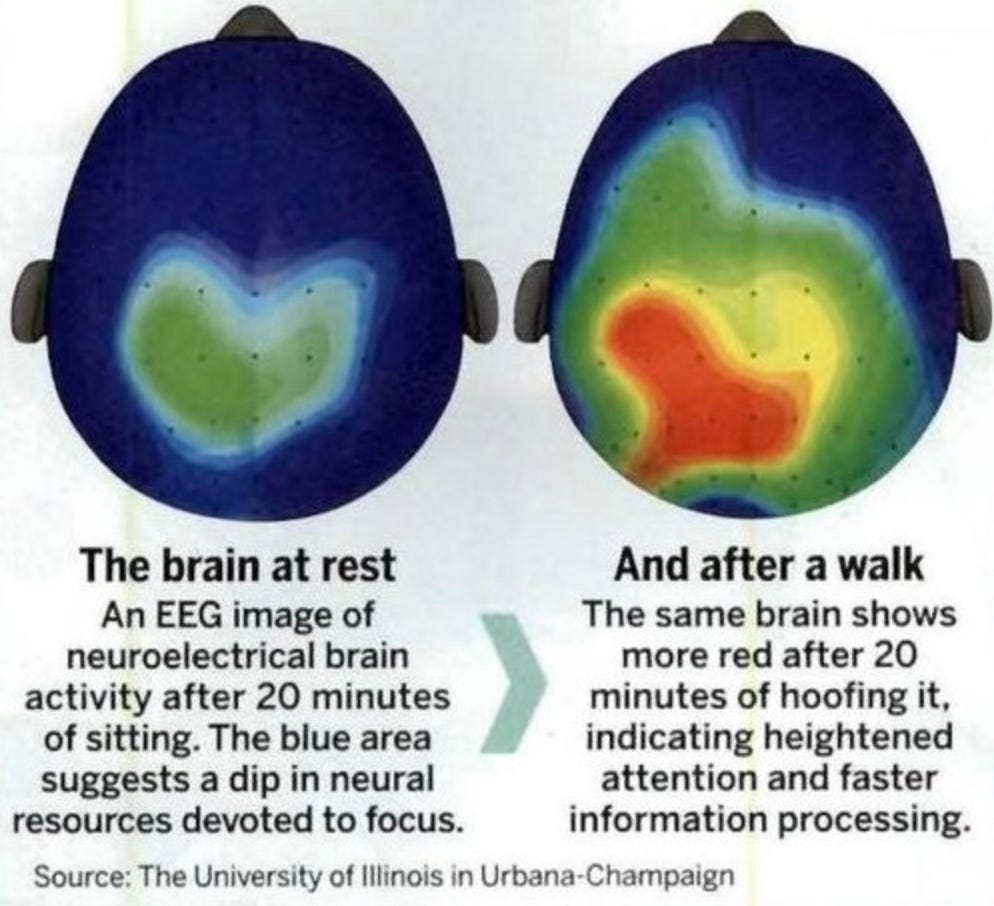
Whilst the link between movement and the brain flushing out unwanted waste is still speculation a good walk will still help you clear the mind of those dominating thoughts. Take a walk today, it is likely good for you in multiple ways.
Rings that turn Sign Language into Text
Many deaf people use sign language to communicate. Sign language is complex with its own syntax, grammar and structure. This makes it difficult for those that don’t sign, to communicate with those that do. There are more than 300 different sign languages used throughout the world.
A team in South Korea have developed a new sign language translation system that works by users wearing seven rings equipped with sensors. The rings are wirelessly connected allowing full freedom of movement and natural signing. Each ring contains a tiny accelerometer. When a person signs while wearing the rings, sensors measure finger orientation, relative to gravity and capture the direction of hand motion.
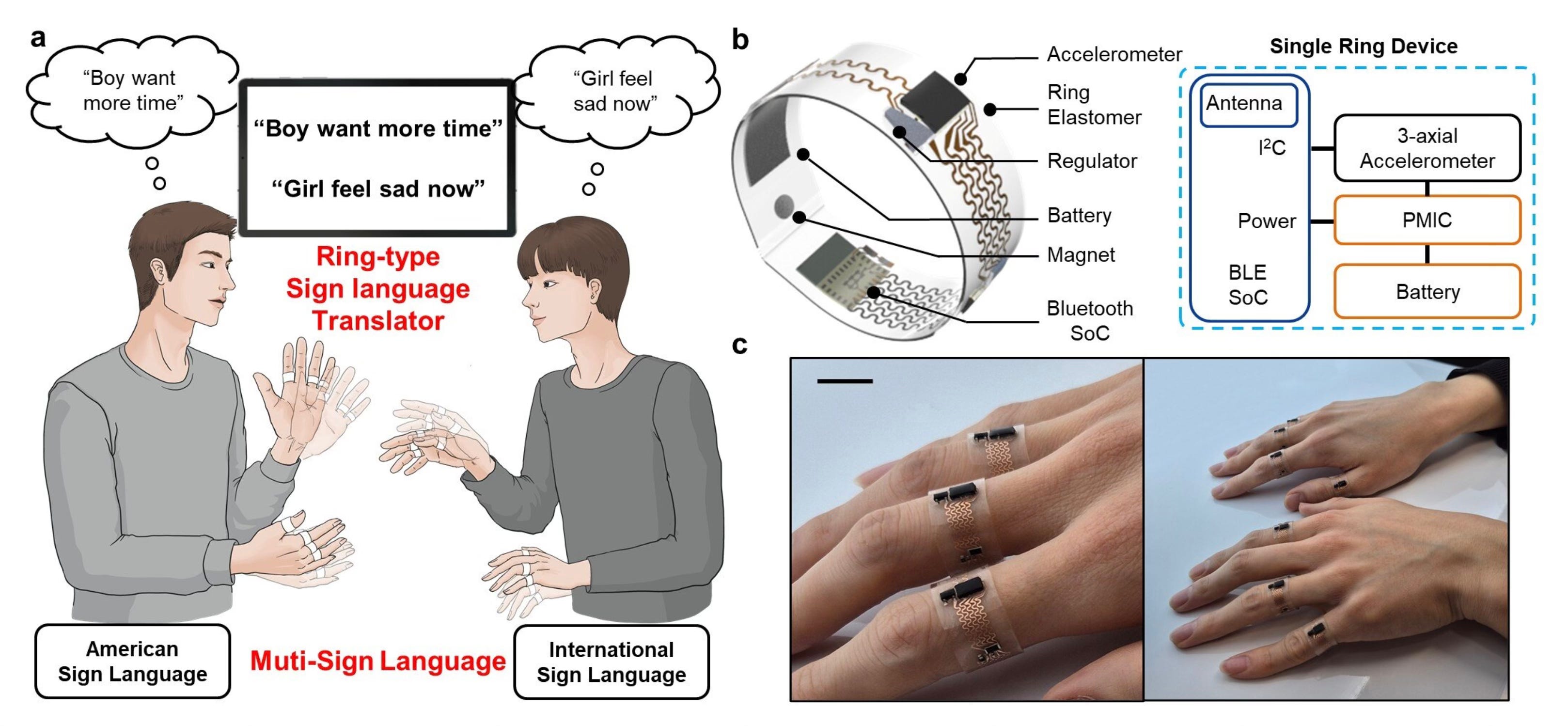
The signals are then sent to a smartphone or computer via bluetooth. AI can then interpret these movements and gestures into written text. The system provides real time sentence level translation that can generalize across users and sign languages.
The system, called WRSLT, can recognise 100 words in American Sign Language and 100 words in International Sign Language. In testing the system correctly recognized 88.5% of ISL words and 88.3% of ASL words. This was despite a signing variability between users and differences in sensor alignment.
The team will now further miniaturize the rings and expand the training data to include more words and different signing languages.
112 Gigabytes per second Wireless link for 6G
We have spoken before about the progress towards 6G phone systems and the massive increase in likely data transport. A team at Tokushima University on the island of Shikoku in Japan have demonstrated a single channel wireless transmission at 112 Gigabytes per second in the 560 GHz band. This is a significant step towards making 6G a reality.
Conventional electronics face fundamental limitations in generating stable high frequency signals beyond 350GHz. This problem is an issue for phones being able to use the terahertz part of the spectrum for ultra high speed wireless communication.
The team developed a compact and stable micro-comb device using a fiber coupled micro-resonator. By directly bonding an optical fibre to a silicon nitride micro-resonator the team eliminated the need for precise optical alignment enabling significant miniaturization and improved operational stability. The configuration also allowed high power optical pumping and long term stable operation which establishes a platform for low-noise terahertz signal generation.
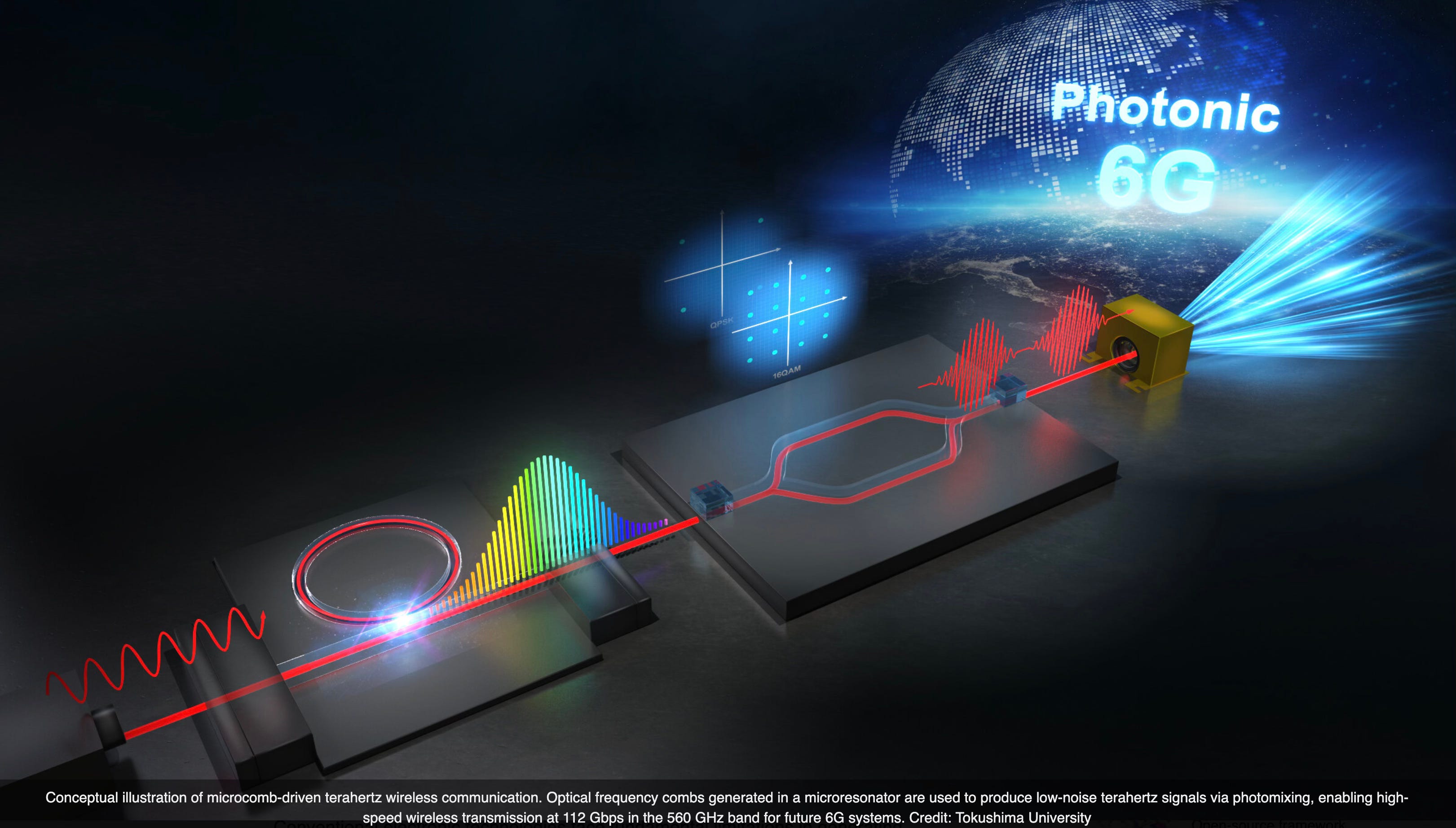
This work provides a key technological foundation for the ultra high speed mobile backhaul links and photonic wireless networks needed in 6G systems. The next step is to further reduce phase noise, enabling higher order modulation formats and extending transmission distance through improved terahertz output power and antenna design.
As a reminder, 6G is expected to be available in 2030 however Samsung has estimated that it might be ready by 2028.
Quantum Battery
The CSIRO in Australia have developed the world's first instant charging quantum battery. We have spoken about quantum computers and how they might be able to solve ultra complex problems almost instantaneously. This is due to a strange feature of the quantum world called “collective effects”. Quantum batteries use these collective effects to recharge almost instantly.
Under the right circumstances the storage units of quantum batteries don’t act individually, they behave collectively. If it takes a second to charge one storage unit (in quantum batteries the storage unit is a molecule) on your battery, the collective effect will mean all the storage units in the battery will be charged in 1 over the square root of the number of molecules in your battery. If you double the size of a battery then it will take just over half as long to charge. For conventional batteries, the bigger the battery the longer it takes to charge.
This is weird so don’t get hung up trying to rationalize it in your mind. The current capacity of a quantum battery is still tiny, a few billion electron volts. The time that the charge is held is also only a few nanoseconds. This technology is very much still in the lab and has a long way to go for commercialization. However we need to remember that the Wright brothers first flight only lasted for 12 seconds.
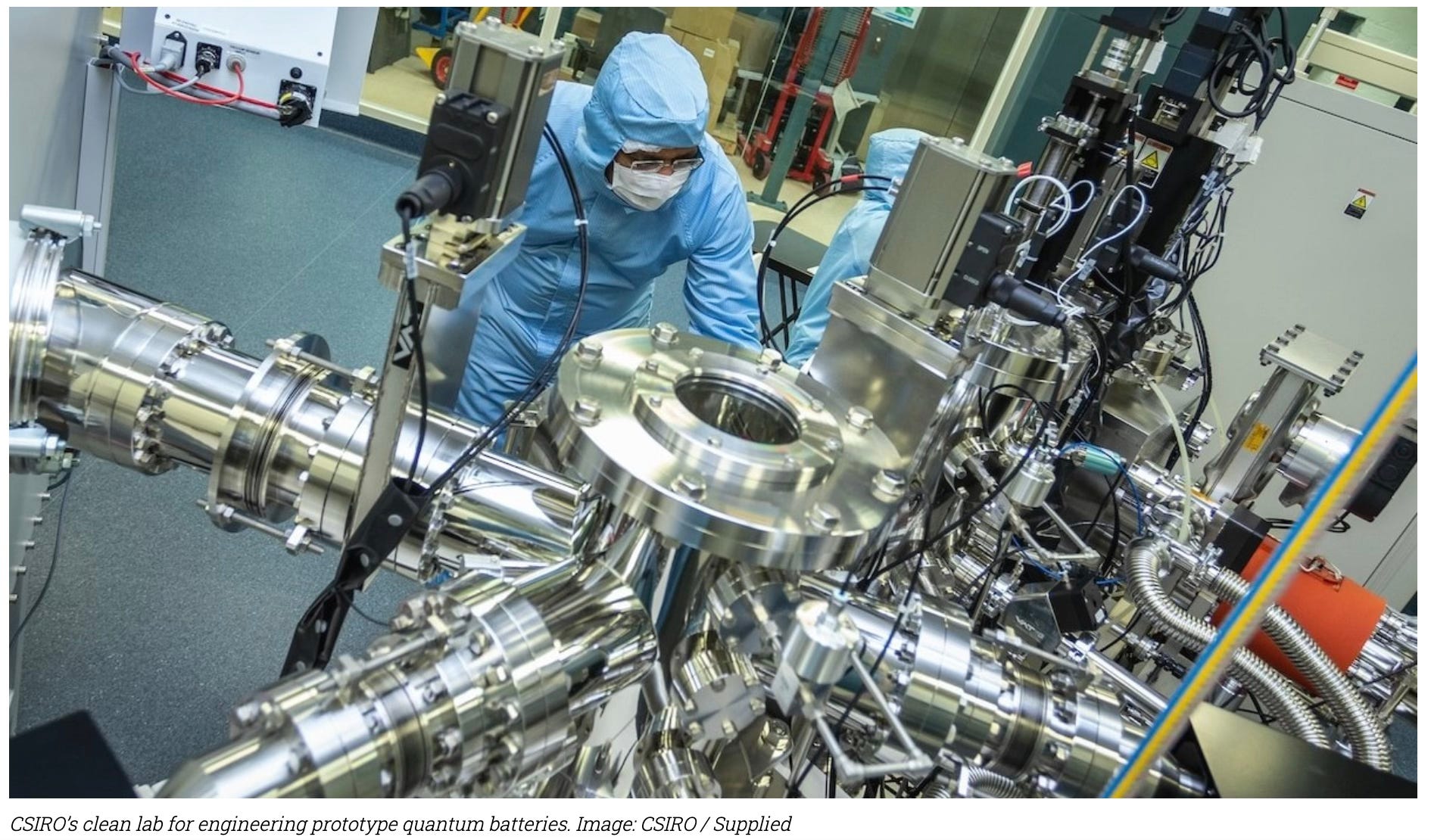
The first application for quantum batteries is likely to be quantum computing. Quantum batteries may be the ideal solution for allowing quantum computing to scale and become practical. The team is working on scaling up their prototypes and extending how long the charge can be held.
Paying it Forward
If you have a start-up or know of a start-up that has a product ready for market please let me know. I would be happy to have a look and feature the startup in this newsletter. Also if any startups need introductions please get in touch and I will help where I can.
If you have any questions or comments please comment below.
I would also appreciate it if you could forward this newsletter to anyone that you think might be interested or provide a recommendation on Substack.