
Universal Vaccine Progress, Rebuilding Sydney's Rock Oyster Colonies and the Gravitational Hole under Antarctica
February 26
This week we investigate the progress towards a Universal Vaccine for all of the ills that winter throws our way. We examine a revolutionary data storage system that will hold our precious memories for over 10,000 years. We consider the impact of the Gravitation Hole below Antarctica and finally we discover an effort to rebuild the Sydney Rock Oyster Colonies that were so thoughtlessly destroyed by the early settlers in Australia.
Universal Vaccine Progress
The dream for researchers is to find a single vaccine that will protect us from all of the pathogens that try to attack us, particularly in the winter. A team at Stanford Medicine has taken a step towards that goal.
In a study in mice the team has developed a vaccine formula that protects against a wide range of respiratory viruses, bacteria and allergens. The vaccine is delivered via a nasal spray and it provided the mice with broad protection in the lungs for several months. This protection included SARS-CoV-2 and other coronaviruses, staphylococcus aureus and Acinetobacter baumannii (common hospital acquired infections) and house dust mites.
In the 1790’s the first vaccination was developed to protect us from smallpox. Ever since every vaccination has been antigen specific i.e. it mimics a certain feature of the pathogen and thus only works on that pathogen. It has been this way for 230 years. The problem is many pathogens quickly mutate enough so that the immune system does not recognize them based on the vaccinations that have been received.
The new vaccine doesn’t mimic any part of the pathogen, it mimics the signals that immune cells use to communicate with each other during an infection. This integrates the innate and adaptive branches of the immune system and creates a feedback loop that sustains a broad immune response. Previous vaccines focused on the adaptive branch, this vaccine focuses on the innate branch.
The innate branch of the immune system is fast acting however it typically only lasts a few days before ceding control to the adaptive branch. The innate branch can be considered a team of generalists that destroy anything deemed to be a pathogen.
The team created a synthetic vaccine administered via a nasal spray that has the right combination of signals sent by T-cells (sent as cytokines that activate pathogen sensing receptors) and some antigen to get the T-cells into the lungs. The new vaccine mimics the T cell signals that directly stimulate innate immune cells in the lungs. The harmless antigen is an egg protein called ovalbumin which recruits T-cells into the lungs. This maintains the innate response for weeks to months.
Three doses of the vaccine protected mice against SARS-CoV-2 and other coronaviruses for three months. Unvaccinated mice suffered dramatic weight loss and often death. Their lungs were inflamed and full of the virus. All the vaccinated mice survived with much less weight loss and much clearer lungs. The researchers then expanded their testing to a wide range of pathogens which showed similar results.

The next step is a test in humans. Initially a Phase 1 safety trial followed by a larger trial in which vaccinated humans are exposed to infections. It is likely to take 5 to 7 years if there is sufficient funding and political will for this to become available clinically.
If it does become available two doses of the nasal spray at the beginning of winter should be enough to protect us. If another pandemic arises, a quick couple of doses should be able to hold us over until a specific vaccine is developed.
Revolutionary Data Storage System
A team at Microsoft have developed a data storage system that can store the equivalent of two million books on a drink coaster sized device. The team estimates that the system will be useable for the next 10,000 years. Current data storage devices degrade within a decade or so.
The team used a high energy laser to imprint deformations into a 3D chunk of borosilicate glass (the type of glass used in overwear). Each deformation encodes data that can be read out using a microscope or laser. A 12 centimeter wide, 2 millimeter thick square of the glass can store 4.8 terabytes of data.
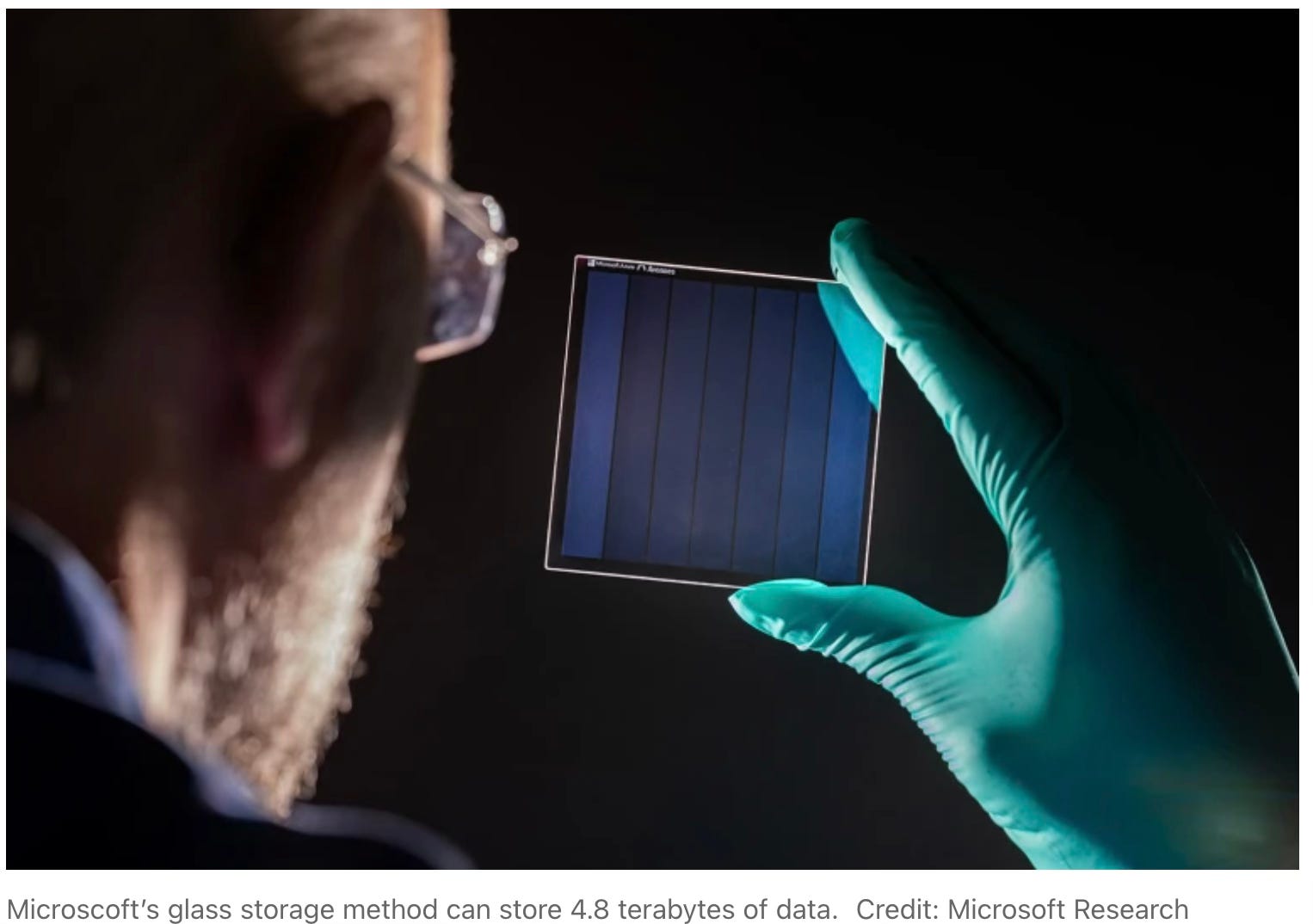
It is much more difficult to write the data onto the glass than storing it in a hard disk however the information is much more secure. Their testing suggests that the data would survive for 10,000 years at a temperature of 290C and potentially for tens or hundreds of times longer at room temperature. Once the data is written into the glass it is immutable (it can’t be changed).
The permanent marks within the glass are called voxels. Sort of like a 3D pixel. A laser changes the physical structure of the glass so that the encoded data is locked and cannot easily be erased or changed. The laser beam is split allowing many dots to be written simultaneously. A machine learning based system uses lasers to read the voxels back.
The Gravitational Hole under Antarctica
There is a mysterious dip in the Earth’s gravity beneath Antarctica. A team at the University of Florida have discovered why.
When I was a boy we were taught that gravity was constant all over the globe. In reality gravity is not uniform across the Earth’s surface. Its strength shifts from place to place and once the effects of the Earth’s rotation is taken into account, gravity reaches its lowest point just beneath Antarctica.
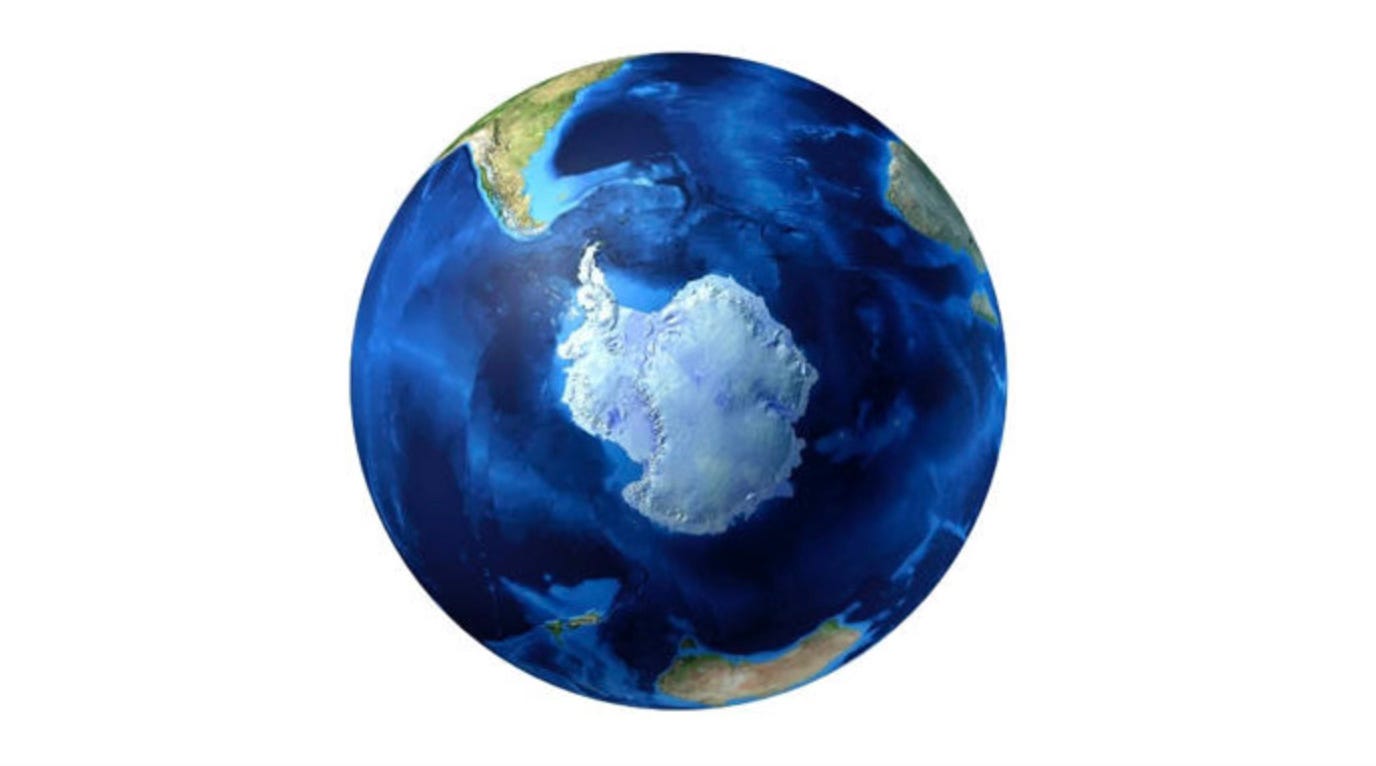
The team found that this so called Antarctic gravity hole developed because of extremely slow movements of rock deep within the planet over tens of millions of years. This change in gravity occurred at the same time as major shifts in Antarctica’s climate. Future research may determine if the evolving gravity patterns played a role in the expansion of the massive ice sheets that cover the continent today.
Whilst the gravity variations are small they do have an influence on the oceans. Water naturally shifts to where gravity is slightly stronger. In the regions where gravity is weaker the oceans sits a bit lower relative to the Earth’s center. Around Antarctica there is a measurable drop in sea surface height compared with what would otherwise be expected.
The team used the seismic waves produced by earthquakes to identify the different rock structures inside the planet. The gravitational effects were then calculated and a map of the Earth’s gravity field was generated. This map closely matched the highly accurate satellite measurements considered the benchmark for tracking gravity worldwide.
Once the structure was understood, the team tried to reconstruct how the Antarctic gravity hole formed. Their model traced changes back for 70 million years into the age of the dinosaurs. The gravity hole was initially less pronounced however between 30 and 50 million years ago it intensified significantly. This coincides with major climate shifts in Antarctica including the widespread glaciation of the continent.
The team is now trying to determine if the link is causal or just correlated. This will help us understand the impact of changes (very slow changes over millions of years) in the structure of the planet and the impact of those changes on climate.
Restoring Sydney’s Rock Oyster Reefs
As some of my readers know, the price of Sydney Rock Oysters is becoming absurd. $9.50 per oyster in some of the finer establishments around the city. My readers search for a cheaper indulgence is almost religious. A team from Macquarie University, University of New South Wales and the University of Hawaii may have the answer for them.
During the early colonial days the natural oyster reefs around Port Hacking in Sydney Harbor, Brisbane Water and the Hawkesbury River were systematically dredged and destroyed. Approximately 85% of the natural reefs along the Australian coastline were destroyed.
Oysters are ecosystem engineers who build their own reefs made up of living oysters and the discarded shells of previous generations. The structures are not random. The structures and their arrangement optimizes the establishment and survival of developing oysters and their protection from predators.
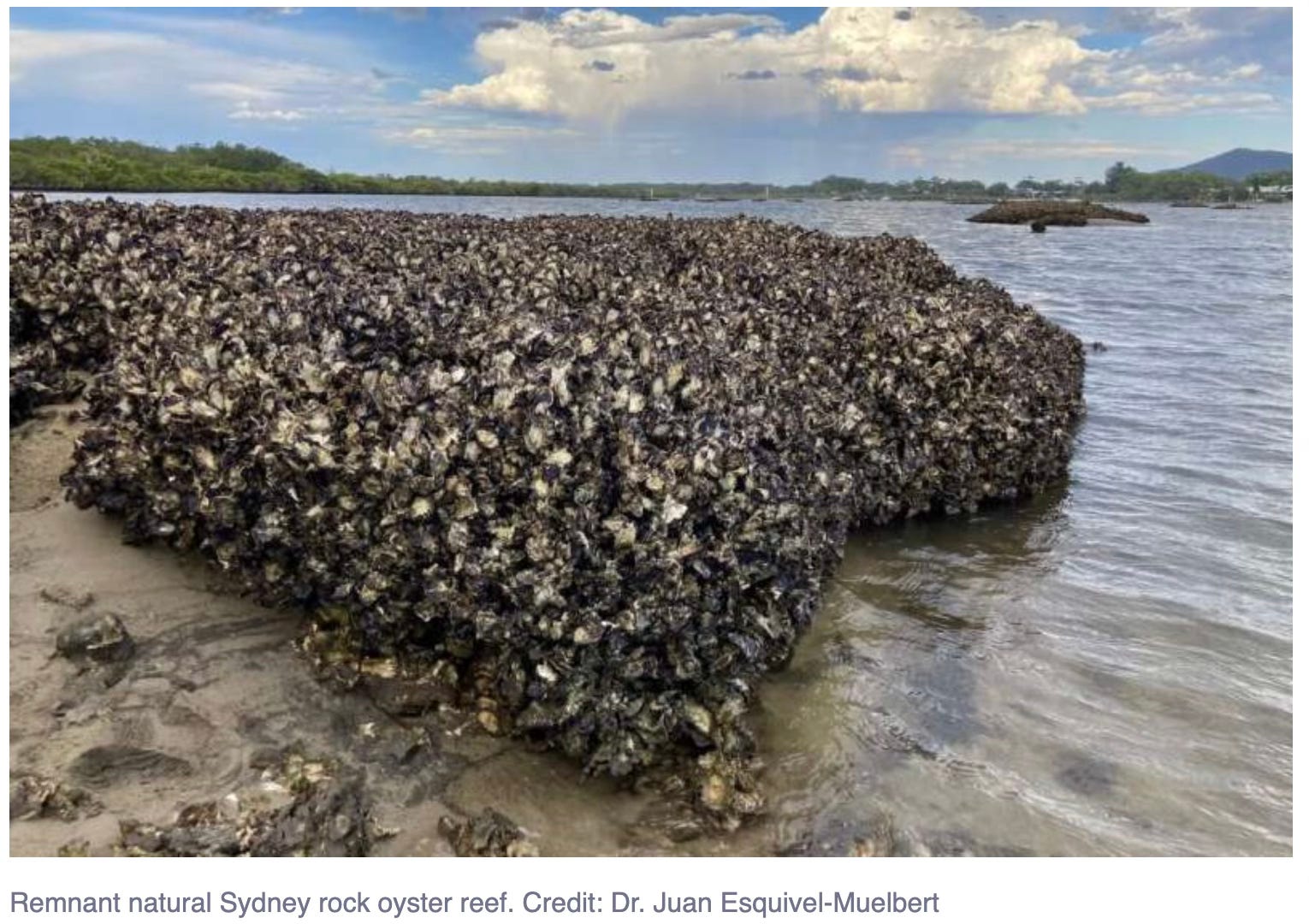
The team modeled concrete tiles with different numbers and heights of ridges that replicated the range of complexity in natural reefs. Multiples of these tiles were deployed, with and without predator proof cages in the three different estuaries around Sydney Harbor, adjacent to existing Sydney Rock Oyster Reefs where there is a supply of oyster larvae.
The team found that the settling of young oysters was maximized by specific combinations of geometric attributes matching those found in natural oyster reefs. The optimal configuration was one that provided multiple spaces for baby oysters to grow with minimal exposure to predators or harmful environmental stress.
The team hopes that the study provides critical information to guide effective nature based reef restoration worldwide. My readers hope that the successful regeneration of the natural environment for the growing of many more Sydney Rock Oysters that can be accessed at a much more reasonable price.
A little bit of bonus trivia. Why did the early colonists in Sydney remove the oyster reefs? They crushed the shells and used them for mortar in many of Sydney’s original buildings. You can blame the concrete lovers for the lack of Sydney Rock Oysters.
Paying it Forward
If you have a start-up or know of a start-up that has a product ready for market please let me know. I would be happy to have a look and feature the startup in this newsletter. Also if any startups need introductions please get in touch and I will help where I can.
If you have any questions or comments please comment below.
I would also appreciate it if you could forward this newsletter to anyone that you think might be interested or provide a recommendation on Substack.