
Power Generating Displays, Sodium-Lithium batteries and Automated Freight Movement.
May 28
This week we discover a power generating display that can absorb light, generate electricity and then emit visible light in the form of an ad or other display. We investigate a new Sodium-Lithium battery that is cheaper than lithium-ion batteries and more energy dense than sodium batteries. Finally we examine a few new transportation technologies that may help automate the transport of goods.
Power Generating Displays
A team at the Institute of Science, Tokyo has developed an organic semiconductor that can generate electricity from surrounding light and emit bright visible light. This brings the potential for displays that generate their own electricity to show you their ads or information.
Currently diode based devices such as displays or smartphones only excel at one job. Displaying information. They can not capture sunlight whereas a solar panel can capture sunlight but will never act as a display. Both are based on the same physical foundation technology.
When light excites organic semiconductors it generates charges (electrons) and their positively charged counterparts known as holes. When the charges recombine, they produce electricity or emit light. Much of the energy is lost as heat.
The team concentrated on controlling the energy flows between the two organic materials. They selected and combined multi resonance thermally activated fluorescence materials where electron density alternates across adjacent atoms. This creates an ideal energy level architecture that prevents captured energy from transferring to other states (i.e. heat).
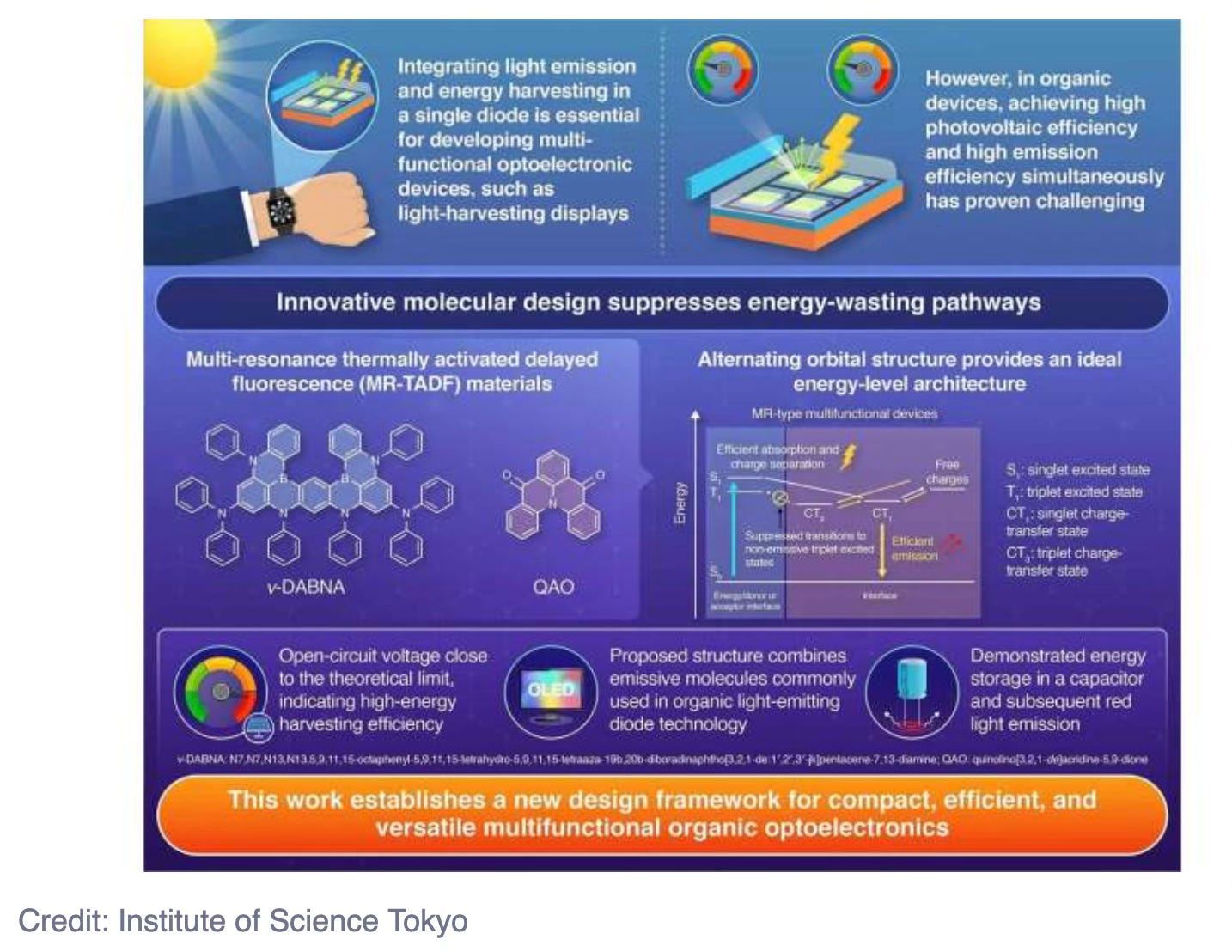
Their device was able to emit a bright red light that matched the brightness of commercial smartphone displays. The device operated at 3.2 volts making it compatible with standard lithium ion batteries.
This work is a big step forward to a multifunctional device that can power itself. Applications such as window displays, wearable and skin mounted electronics and comfortable sensors may be possible.
Sodium-Lithium Batteries
There has been significant effort to develop sodium ion batteries in recent years. Sodium is much more plentiful than lithium and therefore cheaper. However Sodium has a lower energy density meaning less available power per kilo, less kilometers before the car needs a recharge. Phones, tablets and laptops would have to be heavier to keep the same battery life.
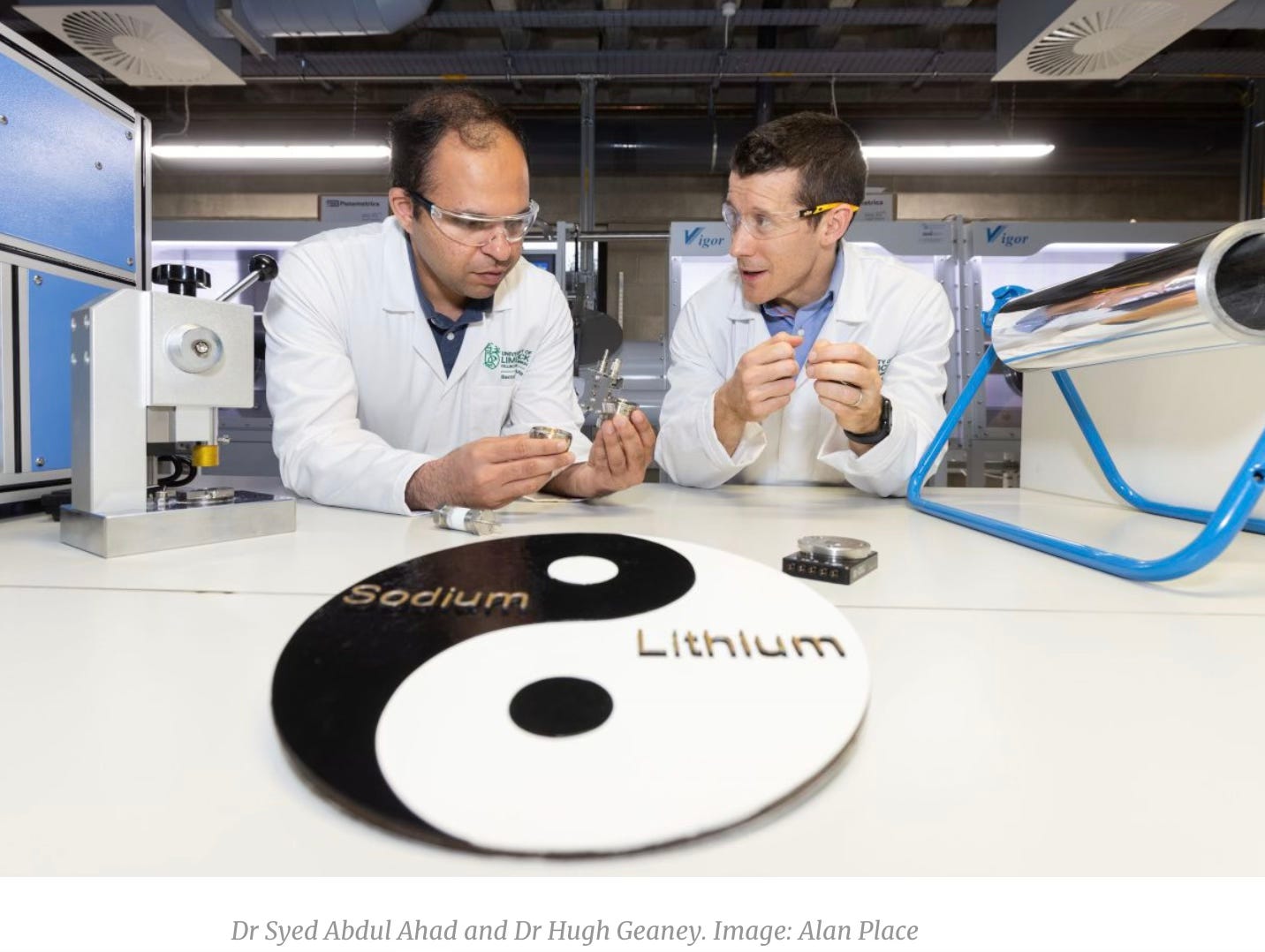
A team at the University of Limerick has taken a different approach by combining lithium and sodium in a single battery. They developed the first full cell battery with two electrodes, one positive and one negative, that uses two charged atoms or molecules (ions). The charged atoms are sodium and lithium. This type of battery is known as a dual cation battery.
The battery has one electrode that is immersed in an electrolyte (rather than two). A small amount of lithium salt was added to a sodium dominant electrolyte. This radically changed the way that the battery behaved. It now had double the storage capacity of an equivalent state of the art sodium based battery. The battery was stable up to 1000 charge discharge cycles. Most sodium-ion batteries fade after a few dozen cycles.
This battery may also reduce the reliance on cobalt and nickel cathodes which are common but supply constrained and thus expensive. The main issue with the new battery is that the anode was made from Germanium which is expensive. The team’s next challenge is to replace the germanium with cheaper anode materials. One candidate is silicon which can reliable host both lithium and sodium ions during changing and discharge. Testing with different ions, lithium-magnesium and potassium-sodium is also underway.
Freight Movement
A couple of developments in autonomous freight transport.
Autonomous Trucking
San Francisco based company, Humble has just emerged from stealth with a fully autonomous, cabless electric truck designed for cost efficient freight transportation. Their platform adopts to different cargo types and logistics environments such as warehouses, railyards and seaports.
Their vehicle design allows for 360 degree coverage of its surroundings via camera, LiDAR and radar. Using a vision-language-action model the truck can reason about the world and take the correct action even in scenarios it has never experienced. Fully electric it is safe from fuel costs and has reduced maintenance.
In the US trucking is a $800 Billion business. With driver shortages and supply chain fragmentation the industry is ripe for disruption. The platform can adjust to 40 foot international containers and 53 foot US domestic containers. The cabless design and lighter platform allows an increased load capacity. The vehicle can be towed by any traditional tractor.
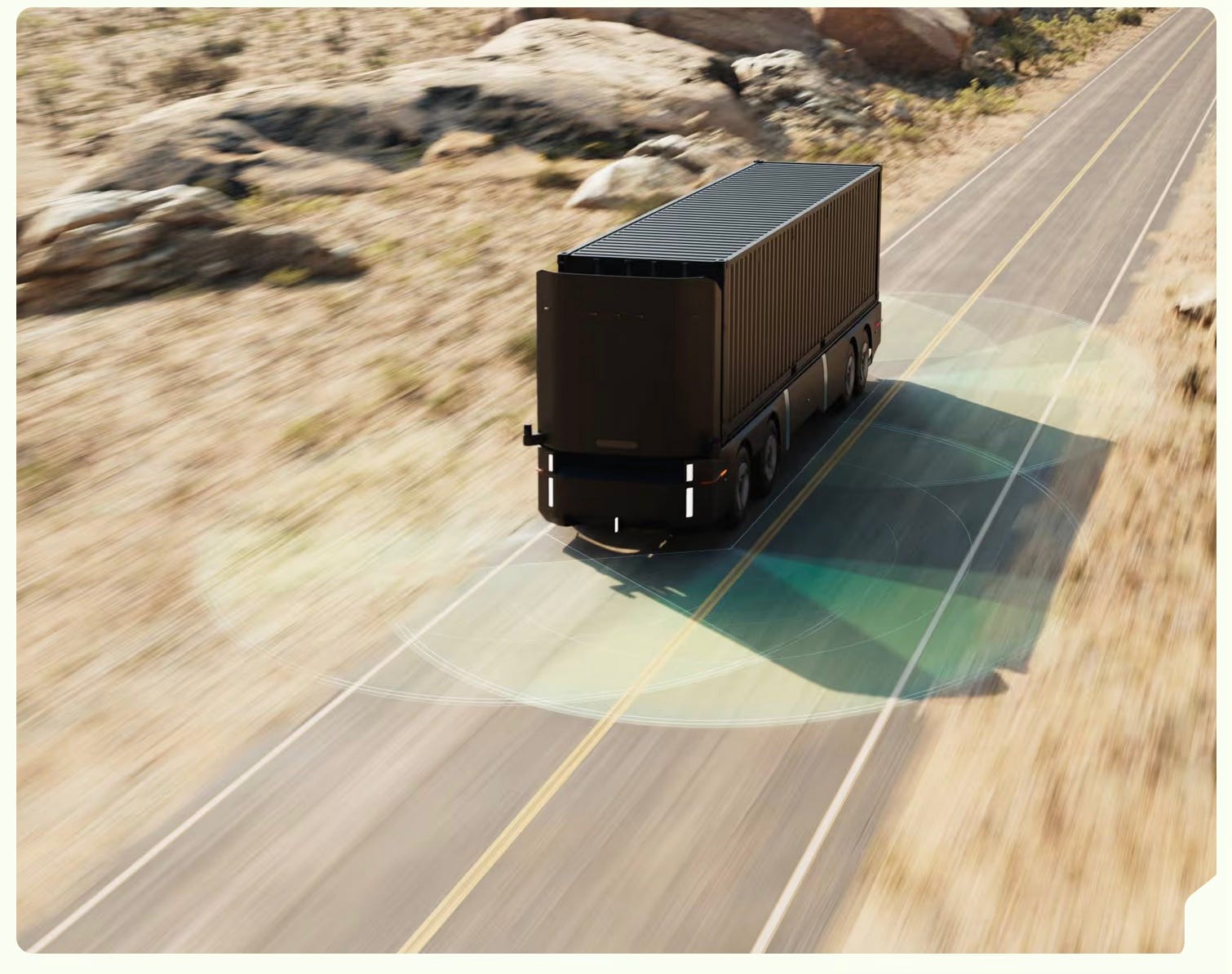
The unit has a 320 kilometre range, a maximum speed of 90 Kph and the lowest cost per kilometer cost in the US. The unit can be unloaded directly at the dock.
Battery Electric Trains
Parallel Systems are developing what they describe as the world's first autonomous freight train system. The company is trying to modernize freight rail using electric, autonomous, software controlled rail vehicles designed to work without locomotives or engineers.
The system is designed to use battery electric rail cars, each equipped with its own motors, sensors, braking systems, cameras, LiDAR and onboard computers. Each rail car can operate independently or travel in coordinated groups.
The system is designed to make better use of current freight rail networks. The team is concentrating on smaller freight movements (one car at a time), shorter distance routes and more flexible logistic operations. The company believes there is opportunity linking ports, rail yards, warehouses and distribution centers.
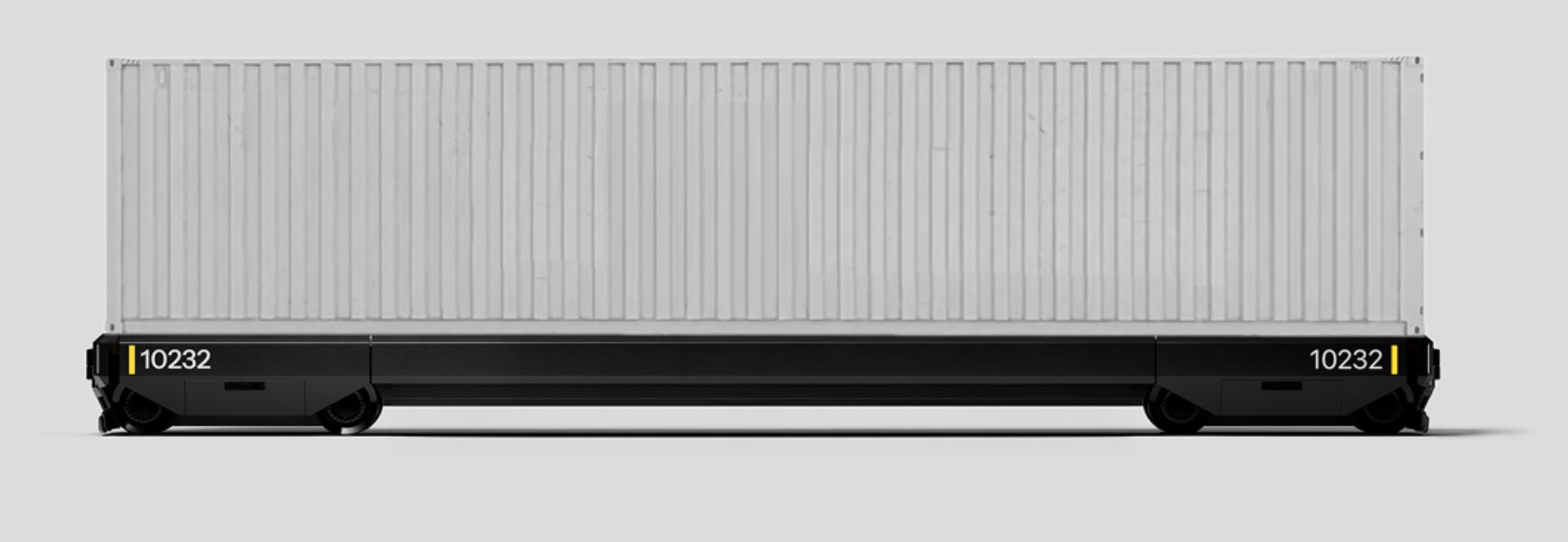
Testing is currently under way in Georgia between the port of Savannah and the city of Cordele. The trains operate autonomously however they are supervised by humans in control centers.
The company is working towards full commercialization and will test their third generation technology early next year.
Paying it Forward
If you have a start-up or know of a start-up that has a product ready for market please let me know. I would be happy to have a look and feature the startup in this newsletter. Also if any startups need introductions please get in touch and I will help where I can.
If you have any questions or comments please comment below.
I would also appreciate it if you could forward this newsletter to anyone that you think might be interested or provide a recommendation on Substack.