
Mesh Network Drone Swarms, Bubbles turning Wastewater into Fertilizer and Robot run Laboratory
June 4
This week we discover a new way to link drone swarms together via mesh networks. We examine turning wastewater into fertilizer by using bubbles and we investigate the use of AI in meat cutting. Finally we learn about a fully robotic laboratory.
Mesh Network Drone Swarms
Drones operating in a swarm can performa a range of tasks whilst exchanging information with each other. These swarms are usually controlled via a mobile central communications link. Where drones are operating autonomously they are only able to communicate via central node, usually a mobile phone mast. If the node is damaged or stops working the swarm can no longer operate cooperatively.
A team at Frauhofer Institute for Integrated Circuits in Erlangen Germany have developed a mobile ad hock mesh network where multiple drones are interconnected in a decentralized manner and communicate via Bluetooth.
Communication within the swarm is totally decentralized. This allows individual drones to continue to communicate with each other even when no external communications link is available. Previously this type of technology only existed in the military sector due to the expense, bulk and was limited to heavy drones.
The team is now developing a table based system where drones act as nodes, the individual drones transmit at regular intervals (known as heartbeats). As soon as two nodes detect each other they update their respective tables, recording which other devices each have identified. With this process taking place every few seconds it is possible to quickly build up a complete overview of the entire drone swarm.
The mesh network works by passing information to the closest connection available. Information will continue to pass between connections until it finds its intended destination. This makes communication with the swarm feel like point to point communication.
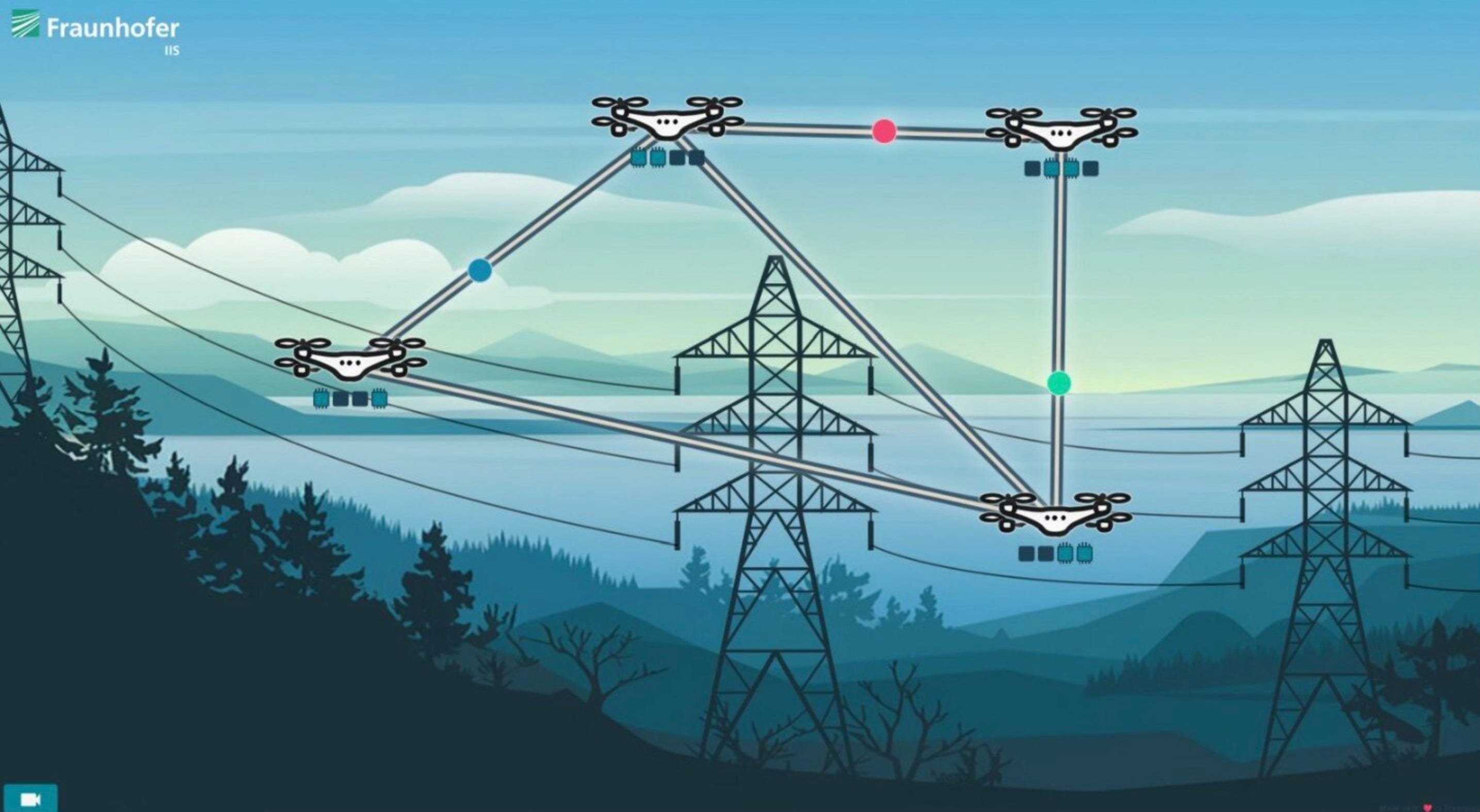
The team has plans for multiple drones with varying capabilities to be launched from one docking case and form a predetermined formation within the mesh network. This will extend the swarms range. Drawing on the different capabilities of the drones, three dimensional maps can be developed. The idea initially came from a satellite based tracking of vultures in Namibia. These swarms will allow teams to analyze the animals behavior and draw conclusions about the impact of environmental changes on the animals.
Turning Wastewater in Fertilizer using Bubbles
A team from the University of Alberta has developed a plasma bubble technology that can purify water whilst retaining the crop benefiting nutrients. The technology works by pumping ionized gas into water. This creates millions of microscopic bubbles that course through the water, reacting in different ways with the material in the water. The bubbles have the ability to degrade organic contaminants in the water in addition to being able to fix nitrogen. Nitrogen is a key agricultural nutrient.
The team used wastewater from the malting industry which produces spirits and beer. The byproduct is rich in organic elements including nitrogen. Whilst nitrogen accelerates plant growth, the other organic materials could put growing plants under stress. After pumping malt wastewater full of the tiny bubbles the water’s organic load was reduced by 90% but the total levels of nitrogen in the water increased to 53.1 mg per liter. This level was almost double the nitrogen content in control experiments.
The resultant water was tested in a hydroponic system where 36 garlic plants were germinated from bulbs. Compared to control plants, the plasma wastewater treated bulbs germinated sooner and developed longer roots. Testing showed that the treated garlic bulbs had assimilated more nutrients than the controls. The garlic continued to grow with the biomass of the treated plants almost double of the controls.
The team is testing a range of other plants with their new system. The system is fully automated and performs the dual function of treating the wastewater and converting it into a nutrient solution for hydroponic crop production.
AI in Meat Processing
Food giant Cargill has developed a new platform called CarVe which is an AI powered system designed to reduce the food waste that occurs in the processing of meat in packaging plants. Tiny inconsistencies in how operators carve meat translates into enormous volumes of edible protein that is diverted to pet food and tallow production.
CarVe utilizes computer vision from cameras placed along the processing line. Operators are given real time, color coded feedback on their cuts of meat. The system will assign each operator a carving score and as workers improve, the typical yield gain is 3 to 5%. Each 1% yield improvement across the massive volumes in these plants could save hundreds of millions of kilograms of meat.
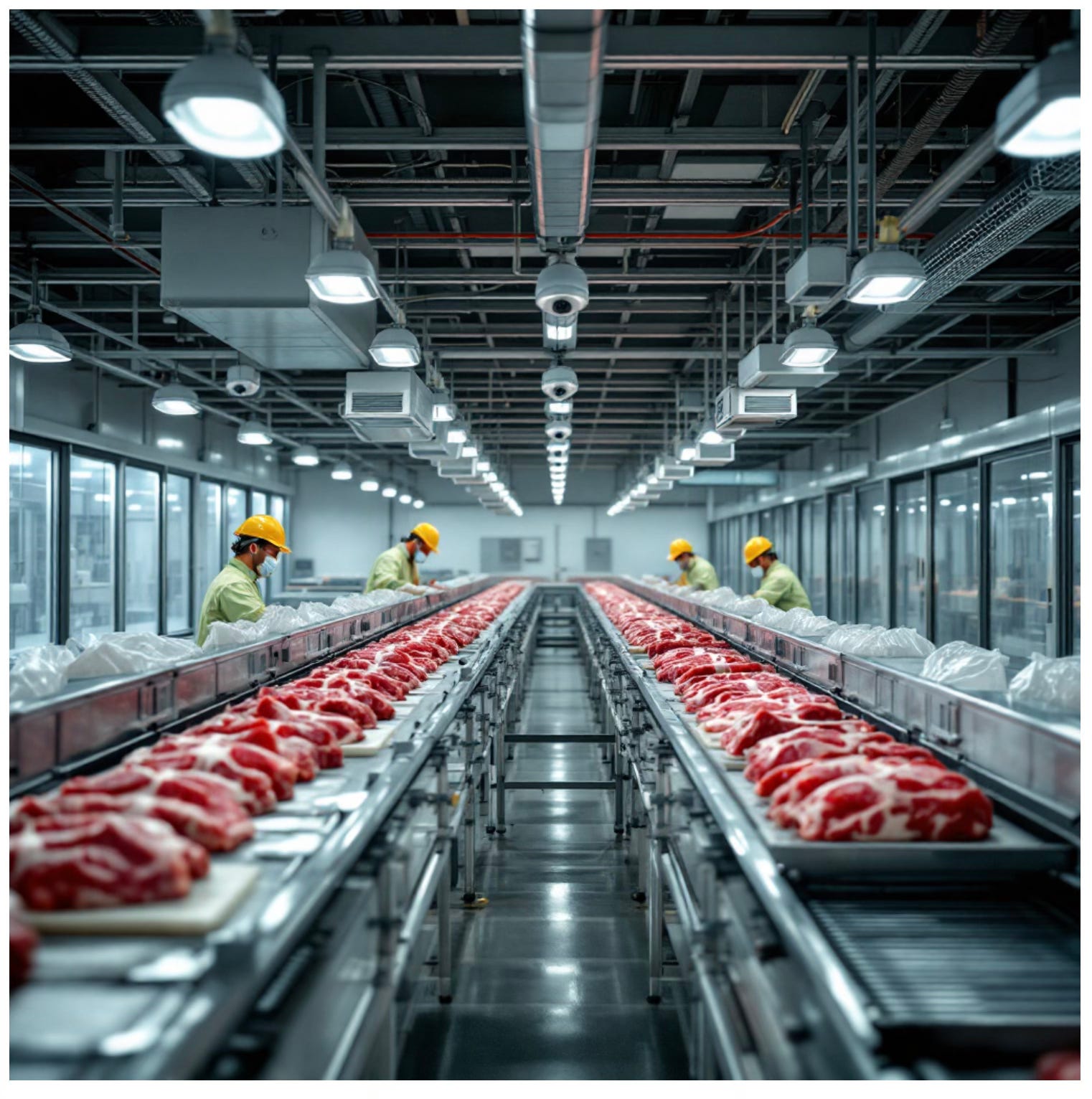
The gamification of the work process is aimed at helping workers at their work. Specific weakness on a given fabrication line can be identified and real time coaching given to improve outcomes. Cargill has developed a smart saw, foreign object detection technology, automated packaging handling and early warning systems to detect equipment failures, safety risks and operational anomalies. There are more than 100 Factory of the Future projects underway across the 35 facilities in North America.
Robot run Laboratory
Tokyo’s Institute of Science has opened a laboratory where robots carry out the menial experiments that were once handled by human researchers. Their goal is to automate nearly the entire research process.
Initially there are 10 robots and no human staff. The plan is to have 2,000 robots in the facility by 2040. The robots use two arms and can perform delicate tasks such as transferring fixed amounts of reagents and opening the doors of temperature controlled equipment to place and remove items. Cell cultivation which has been preprogrammed can be carried out automatically.
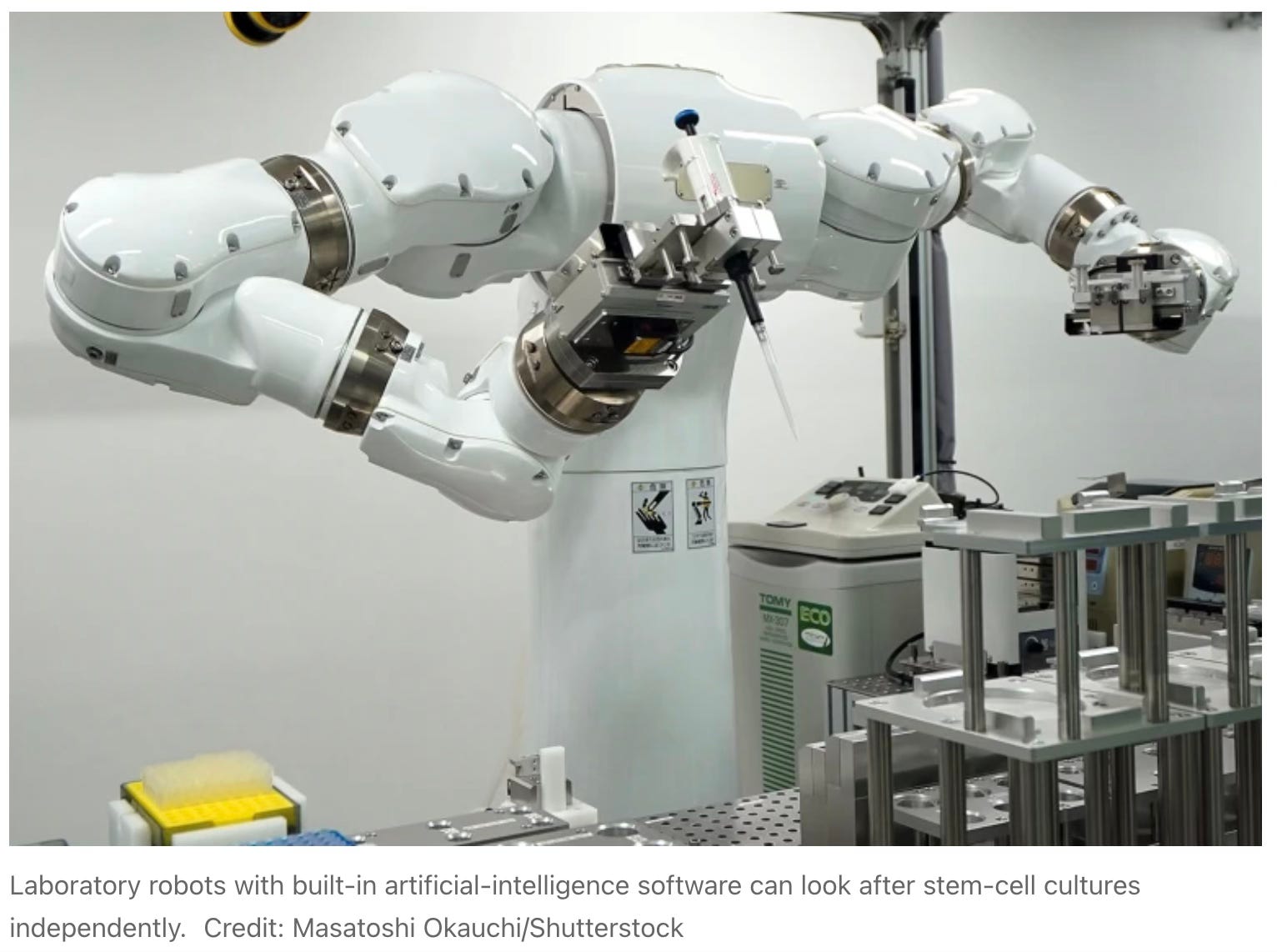
The hope is that the robots will be able to carry out almost all research tasks from generating hypothesis to experimental verification. Research institutions are facing labor shortages and there is a need to reduce human error in experimentation. A research factory will provide an alternative for researchers looking to test a range of hypothesis.
Paying it Forward
If you have a start-up or know of a start-up that has a product ready for market please let me know. I would be happy to have a look and feature the startup in this newsletter. Also if any startups need introductions please get in touch and I will help where I can.
If you have any questions or comments please comment below.
I would also appreciate it if you could forward this newsletter to anyone that you think might be interested or provide a recommendation on Substack.