
Introducing Maice, 60 Second Full Body Ultrasound Scans and Self Driving Toilets
June 25
This week we meet Maice (pronounced May-see) an AI driven work coach that will help you keep up with the changes that AI is bringing. Built by yours truly I would love for you to try it and send me any feedback. There is a two months free code in the story below. We examine a pivot by an AI image generation company that is developing a 60 second full body ultrasound scan. We investigate a liquid that can capture light in a bottle and store energy. Finally we learn about a new way sports fans can ensure that they don’t miss a second of the action, a self driving toilet that comes to you when nature calls and then returns to its base after you have finished.
Introducing Maice
We have spoken a lot about AI and the applications of AI. There are massive implications for how we work and the types of work that will available in the future. It won’t be the same as it is today. If you listen to the TV news, read major newspapers or to any AI podcast one consistent theme is that our jobs are going away. The populist politicians are now blaming AI for every ill and job loss in our society.
My view is a bit different. The jobs of today will change and they will change significantly. Jobs however won’t go away. AI will change the nature of work and that will mean learning new skills. My belief is:
“ Your job won’t be taken by AI. It will be taken by someone who can use AI”
That is exactly why I built Maice. Macie is the AI coach that helps you make sure that the someone who can use AI, is you. Maice helps you learn faster, work smarter and keep pace with AI. Maice is a coaching product. Maice works with you – asking the right questions, teaching you proven techniques, and helping you apply new skills directly to your work. It is not a system that automates things for you. Think of it as having an expert sitting beside you, guiding you through every step of the way.

If you would like to try Maice go to www.maice.ai and enter the code MAICE2mFree and you can try the Personal account for 2 months for free. No credit card required for signup. I would love it if you shared this and the 2 months free code with people that you think might benefit. I welcome any feedback that you have about Maice. Reply to this email or send an email to support@maice.ai
Over the coming months I will share my journey to creating Maice. How I learnt to Vibe code like a pro, the mistakes I made and the successes that I had. My recommendations on how you can create your own AI tool and if you learn from my mistakes, how you will save a lot of time and a great deal of heartache. It was a fun journey and I learnt a lot. I look forward to sharing it here.
60 Second Ultrasound Scanner
Many of you will have heard of Midjourney. They are an AI imaging company that creates images from a text prompt. This week they took a sharp left turn and announced a new medical division which is developing a full body ultrasound device that can perform a full body scan in 60 seconds at the cost of a few dollars.
Ultrasound Computed Tomography (USCT commonly referred to as a CT scan) is an old technology that surrounds the body with a ring of ultrasound transducers submerged in water. USCT fires sound waves from all angles simultaneously and reconstructs a full 3D volume from the resulting echoes.
The new product (very much still in development) is designed around accessibility. The user steps onto a motorized platform that descends into a shallow pool of warm water at about 5 centimeters per second. As the platform lowers, the body passes through a ring of transducers that emit ultrasonic pulses and record the returning echoes from every angle.
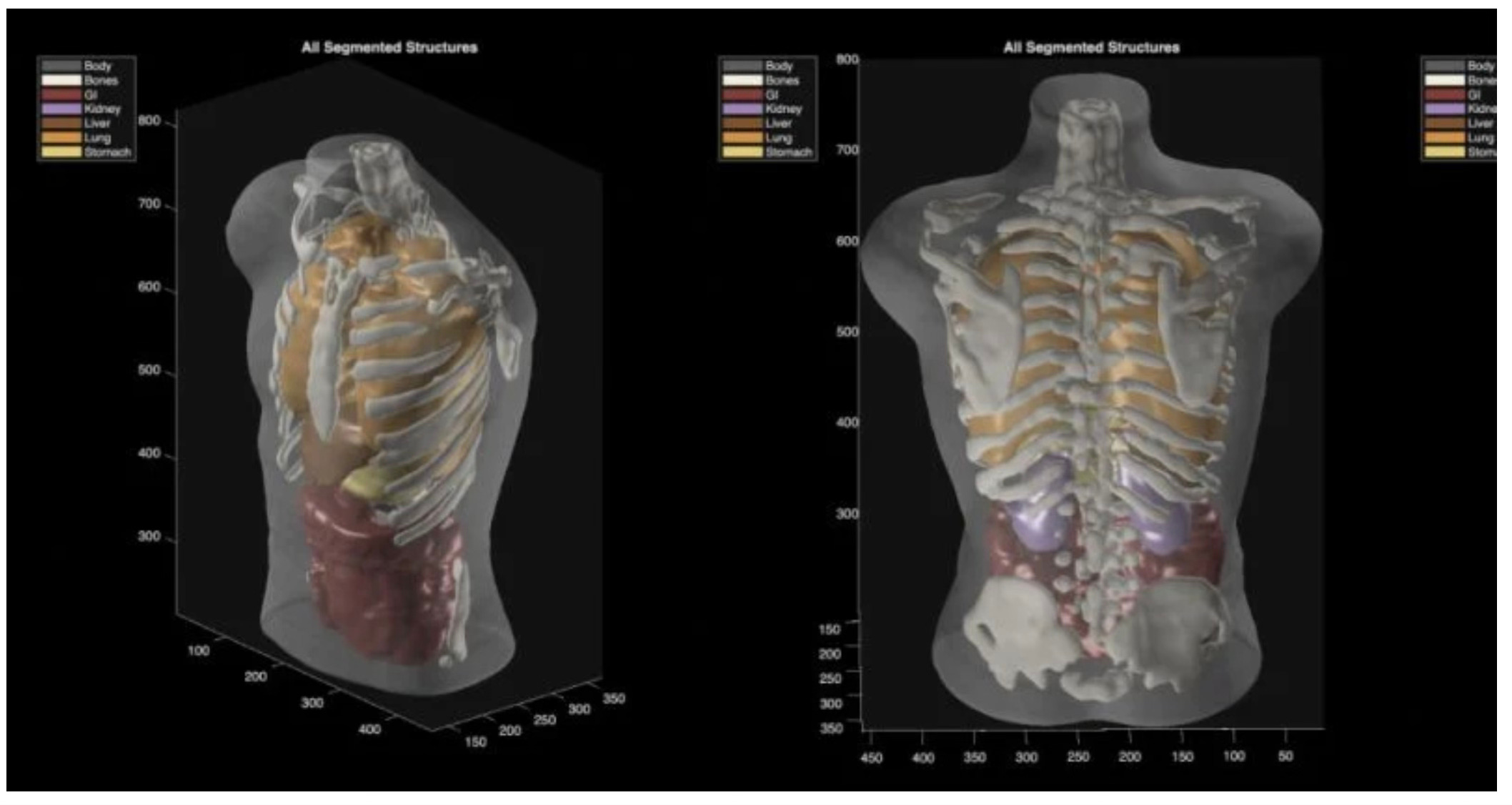
Midjourney signed a co-development agreement with Butterfly Network that developed the underlying technology. Butterfly replaced traditional piezoelectric crystals (the acoustic element) with capacitive micro-machined ultrasonic transducers (CMUTs). Each chip contains up to 9,000 individual CMUT elements and is capable of emitting and receiving sound waves across a programmable frequency range of 1 to 12 megahertz. This eliminates a lot of wires and allows mass production of the equipment.
Each scan produces roughly 17 gigabytes of data. This amount of data transfer is the current bottleneck (but very solvable). The goal is to have the first scans completed in early 2027 and to roll the machines out more widely in 2028. They are targeting a billion scans a month globally with each scan taking less than 60 seconds. They hope to use spas and similar businesses as the customer interface.
The great advantage of regular scans of your body is to find changes early. Specifically trained AI will diagnose issues and refer them to your doctor. As we have often said, the key is to find problems early when they are easy to correct. There is still a significant amount of development work required before the launch. If the pace of Midjourney’s image development is anything to judge them by, they are bound to be ready in time.
Light in a Bottle
A team from NorthWestern University outside Chicago have created a new liquid that can store energy that it harvests from sources including light. Once hit by light, the liquid physically reassembles into a gel. In this jelly like state the material acts as a battery, retaining energy for months at a time. The energy can be released on demand when exposed to oxygen.
The material draws inspiration from the behavior of the cytoskeleton, the network of protein filaments within a cell that constantly self assembles and disassembles. This action enables the cell to move and divide. The team copied this action by designing a molecule made of an amino naphthalene aromatic unit which responds to light and a methyl viologen which can store electrons.
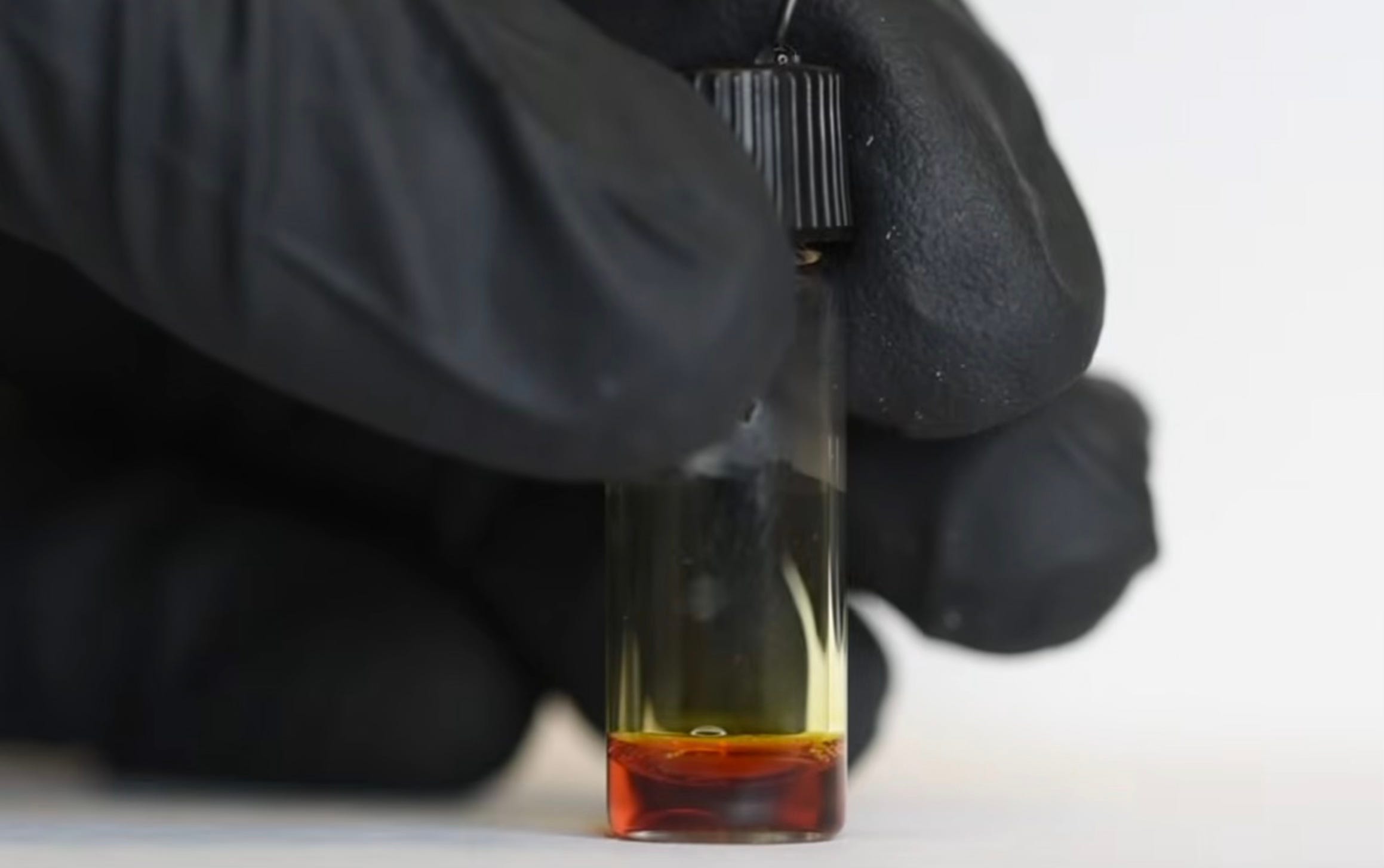
The material starts out as a yellow liquid. When light strikes it, it absorbs energy and donates energy to the methyl viologen for storage. This action turns the liquid into a black gel. Exposing the gel to oxygen disassembles the gel and releases the electrons.
There is much more work to be done however one day the gel might power medical implants (where metal based batteries have significant drawbacks). No doubt the discovery will inspire a range of new uses if the technology can be proven to work commercially.
Self Driving Toilets
Given how lazy so many of us are and the self driving capabilities of so many devices it was almost inevitable that someone would invent a toilet that would come to you on demand. Chinese company, Yueban has developed Xiaoban for those with mobility issues (rather than the lazy, but the lazy might be the bigger market).
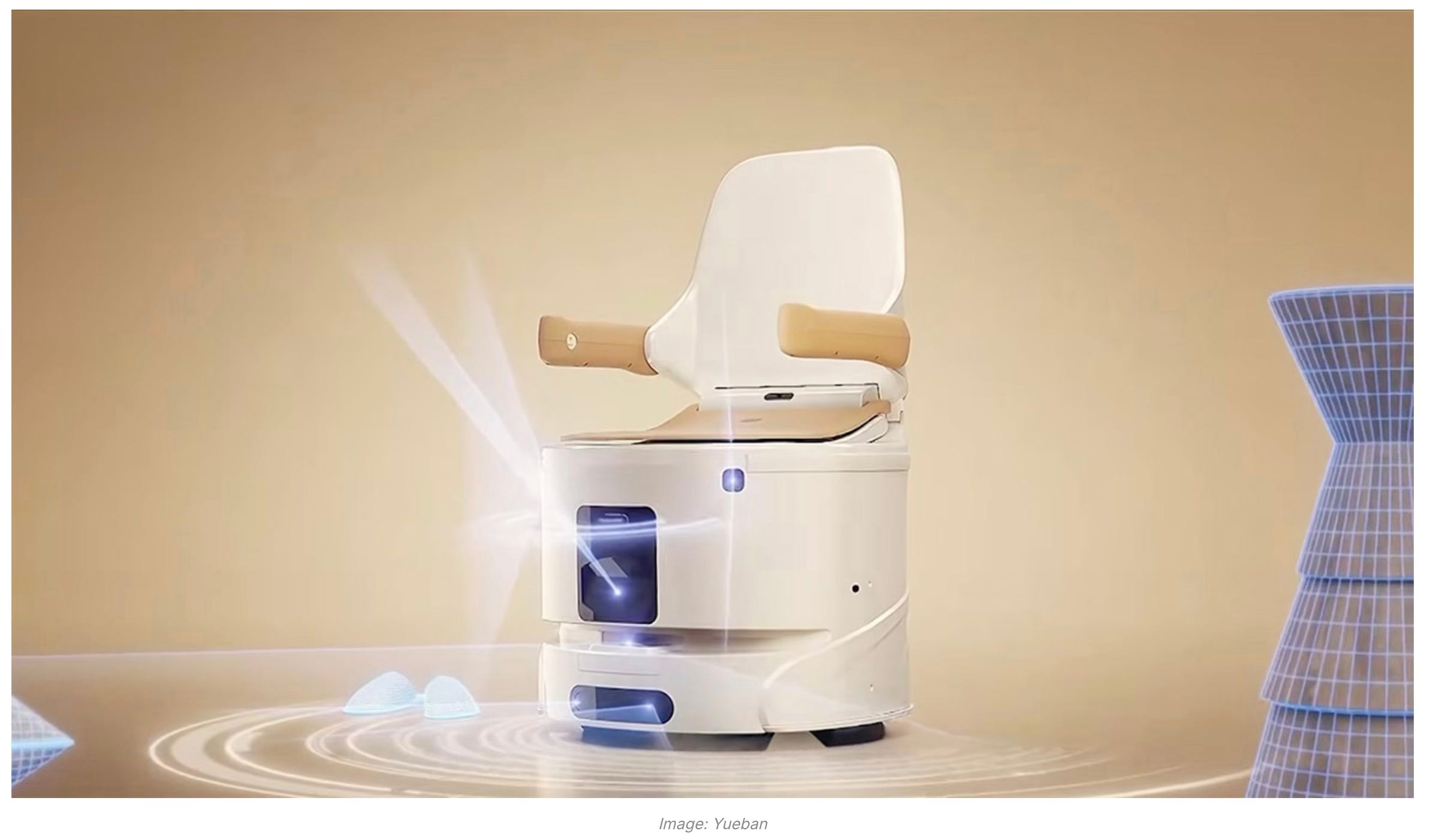
Xiaoban is essentially a mobile smart toilet designed for people with mobility issues or that rely on others for self care. The device is AI powered and can travel to where the user is, cleans itself post use and returns to its charging dock.
The device is simple and user friendly. Press a button on a remote control and the toilet comes to where you are at that moment. You do the business and the toilet returns to the bathroom and cleans itself.
The device is designed to work in private homes and care facilities. Priced at US$4,000 it may be worth it for the lazy to not have to leave the TV during the game.
Paying it Forward
If you have a start-up or know of a start-up that has a product ready for market please let me know. I would be happy to have a look and feature the startup in this newsletter. Also if any startups need introductions please get in touch and I will help where I can.
If you have any questions or comments please comment below.
I would also appreciate it if you could forward this newsletter to anyone that you think might be interested or provide a recommendation on Substack.