
Artificial Eyes, Hexagonal Diamonds and Stopping Lightning
March 12
This week we discover a new type of artificial eye that will help computers more clearly see what they are looking at under a variety of lighting conditions. We examine a newly created hexagonal diamond that is harder than traditional diamonds. We investigate the claims being made by a Canadian company that it can stop lightning. Finally we catch up with a few developments that read about this week that I found interesting.
Artificial Eyes
Current artificial eyes used in computer vision technologies perform poorly under sone lighting conditions and when the light in captured scenes changes abruptly. A team at the University of North Carolina, Westlake University and a range of other institutions have drawn inspiration from the eyes of humans, cats and other animals to develop a new artificial eye.
Currently traditional machine vision systems use complicated hardware and algorithms to fix overexposure and blurriness. This makes the systems expensive, slow and power hungry. Animal eyes have adaptive pupils and neural systems that adjust to light instantly without requiring additional computation in the brain.
The team developed a system to mimic the eyes of animals. The system is known as closed loop pupillary light reflex (PLR). The vision system has a hemispherical bio-mimetic retina or a grid of light sensitive components that collectively process and transmit visual information. The team also developed an adaptive pupil made of liquid metal that changes its shape and size depending on the intensity of light.
The artificial pupil relies on eight liquid metal actuators that can be controlled independently. The actuators adjust the aperture of the pupil, controlling how much light passes through. The actuators can produce different pupil shapes mimicking human pupils.
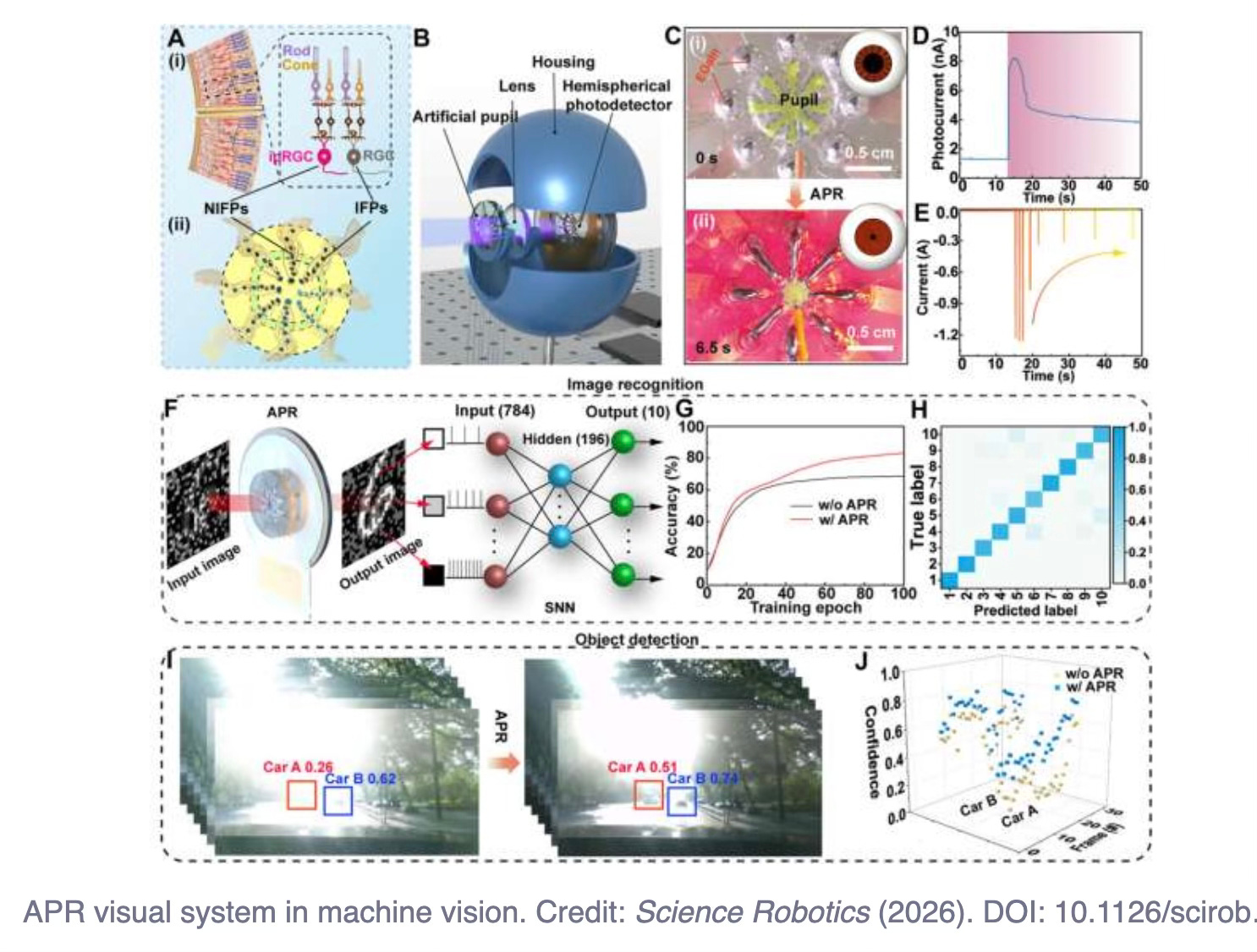
The artificial eye has uses in robotics, autonomous vehicles, medial imaging, drones and neurotrophic computing. The eye improves the ability to capture and analyze images in dynamic real world settings and under changing light conditions. The team is working on scaling down the photodetectors to reduce response time, optimizing the electrode materials to enhance stability and energy efficiency and improving the retina’s photosensitivity.
Hexagonal Diamonds
Diamonds are mostly cubic crystals. In 1962 it was theorized that a hexagonal structured crystal would be a harder material. After many years of fruitless effort a team in China may have finally created this elusive structure which they claim is harder than traditional diamonds.
The hexagonal crystal was formed by compressing graphite at elevated temperatures. The resulting diamond is roughly 1 millimetre in size and harder, stiffer and more resistant to oxidation than cubic diamonds. X-rays showed the crystals structure to be hexagonal with minimal defects.
In the late 1960’s is was claimed that hexagonal diamonds had been found in meteorites however in the mid 2010’s it was shown that the materials were not true hexagonal structures but cubic structures with odd defects.
The team used a highly oriented graphite to create the hexagonal structure. The graphite sheet was placed between tungsten carbide anvils and then subjected to 20 gigapascals (200,000 times the atmospheric pressure at sea level) and temperatures between 1,300C and 1,900C. The team has identified the specific angle needed to squish the graphite in order create the structure. This angle caused the pressure to come from the top rather than the sides.
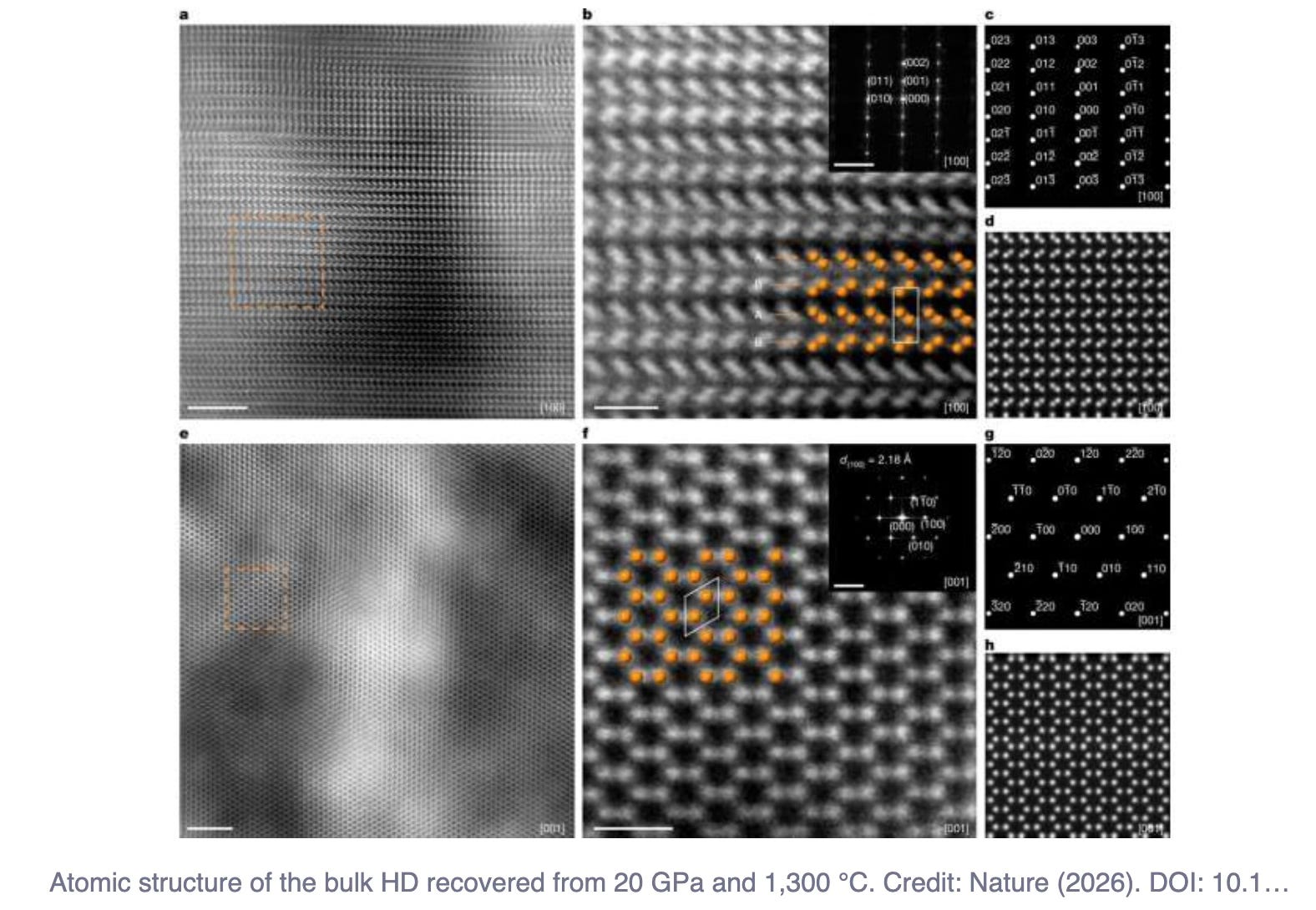
Diamonds are used in many industrial settings. A harder, sturdier diamond may allow new applications and uses in cutting tools and high performance electronics.
Stopping Lightning
In Canada, lightning is responsible for starting 60% of the nearly 7,000 wildfires that burned in 2023. Those fires accounted for 93% of the total area destroyed. A Vancouver based startup, Skyward Wildfire is aiming to stop the destruction caused by lightning by stopping the lighting strikes that ignite the fires.
The company claims that it can stop the majority of cloud to ground lightning strikes in targeted storm cells. They have not revealed how they do this. It appears however that they are using research from the US Government from the 1960’s where clouds were seeded with metallic chaff or narrow fiberglass strands coated with aluminum. This is the same material used to disrupt radar signals. Fighter jets deploy it during dogfights to throw off guided missile systems. The materials are considered non toxic and safe.

The company claims that they have demonstrated the system to Canadian authorities in 2024 and 2025. They have just raised a seed round to enable them to expand to new areas and work with further partners.
A few brief updates that I found interesting
Robot Mice
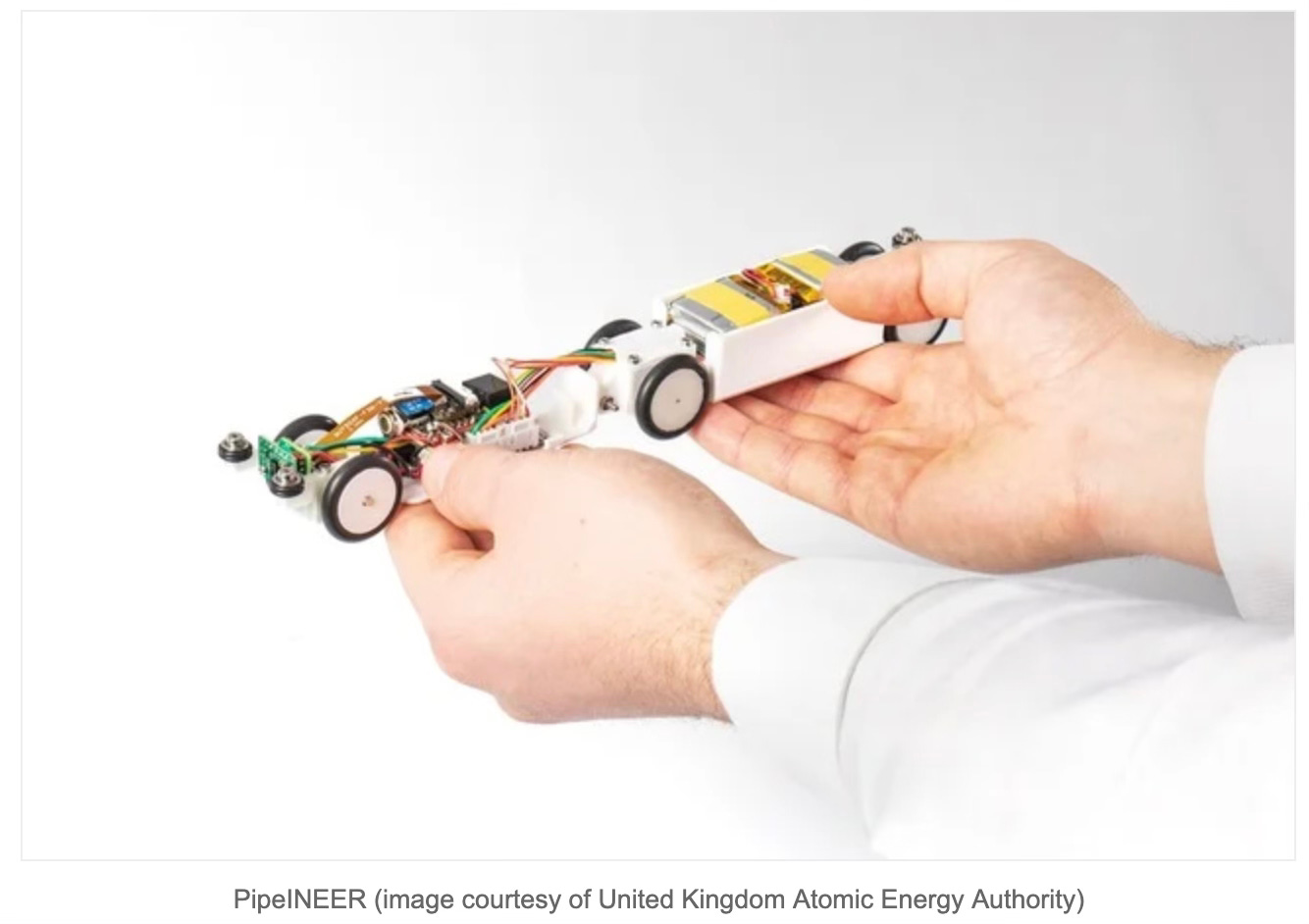
The UK Atomic Energy Authority and CERN have developed a mouse sized robot to inspect parts of the Large Hadron Collider. The circumference of the collider is roughly 27 kilometers long and straddles the border of France and Switzerland. There are a range of narrow pipes that carry the actual particle beam around the collider. These pipes operate in a vacuum at -271C and are surrounded by superconducting magnets. They are positioned deep within the infrastructure making it impossible for human access and inspection.
A robot mouse was developed to travel within the pipes to carry out inspections and locate any damage. An AI model allows the mouse to detect any anomalies and report them back. Each mouse can travel six kilometers on a single battery charge.
Industrial Furnace in Space
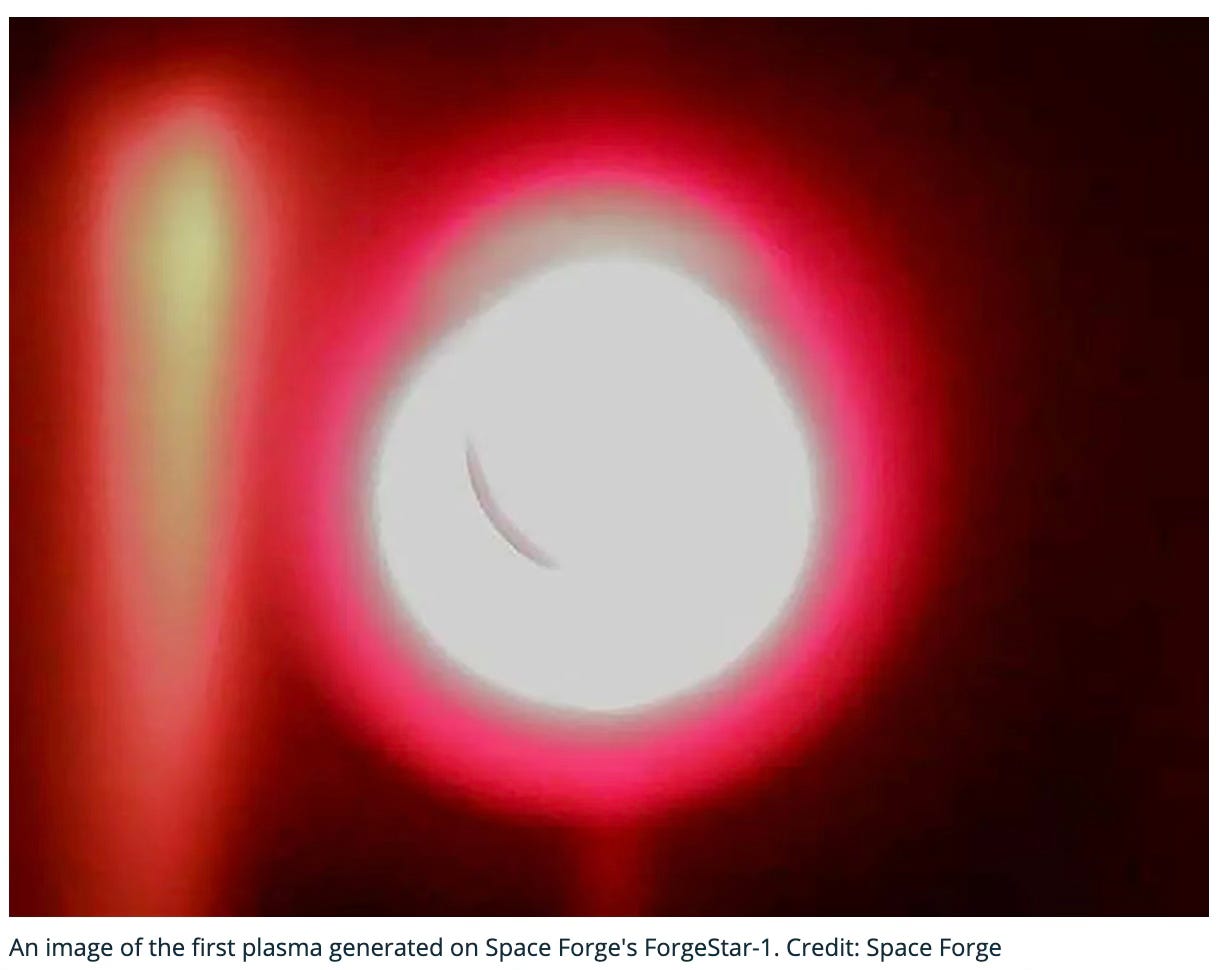
UK company Space Forge has generated a plasma in a 1000C furnace aboard its ForgeStar1 satellite currently in low earth orbit. The goal is to manufacture semi conductors in space. The microgravity environment should lead to semiconductors with fewer defects than those made on earth. Gravity on Earth drives convection in molten materials causing semiconductor crystals to grow unevenly.
Space Forge estimates that the power required to produce components for telecoms and power grid infrastructure could be cut by up to 60% by manufacturing in space. Demand for these high energy chips is surging with the rise of 5G, electric vehicles and AI.
VTOL’s getting ready for launch in the US
The FAA has finally come on board and selected eight air mobility projects for assessment and possible approval for commercial operations. The concepts under consideration include:
Urban Air Taxis
Regional passenger transportation
Cargo and logistics networks
Emergency medical operations
Autonomous flight
Offshore and energy-sector transportation
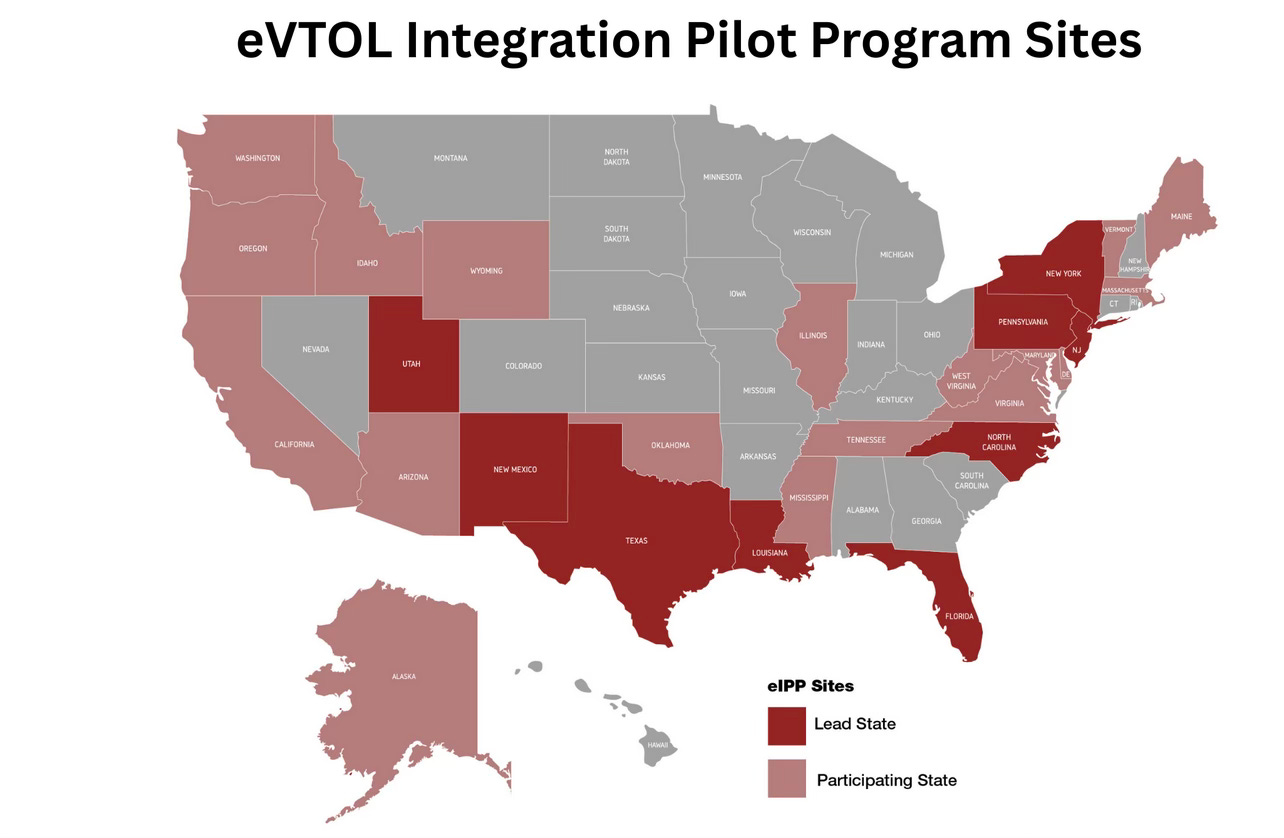
The projects are based in 26 different states and involve leading aircraft manufacturers, startups and state partners. It is expected that the first test flights will commence in mid this year. The goal is to help speed up innovation and bring these projects to market as soon as possible.
Paying it Forward
If you have a start-up or know of a start-up that has a product ready for market please let me know. I would be happy to have a look and feature the startup in this newsletter. Also if any startups need introductions please get in touch and I will help where I can.
If you have any questions or comments please comment below.
I would also appreciate it if you could forward this newsletter to anyone that you think might be interested or provide a recommendation on Substack.