
A Molecule that can help Regulate Sleep, Keeping our Muscles Strong as we Age and Removing Forever Chemicals from Farmland
August 6
This week we discover a molecule that can help regulate sleep. We investigate a way to help our muscles stay strong as we age and we examine a new way to remove forever chemicals from farmland. Finally we continue the saga of My Journey to Creating Maice. This week “What did Claude first suggest and why was it totally wrong?”
Molecule that can help Regulate Sleep
At team from the Chinese Academy of Sciences has showed that a naturally occurring molecule called tryptamine (TrpA) could contribute to the gradual increase in the brain’s drive to sleep. Activating the receptor that detects this molecule could increase the duration and boost the quality of sleep.
There are a range of medications for those who are struggling to get to sleep however most cause dependence or have other side effects. Others struggle to sleep enough hours in a night due to a range of conditions.
Wakefulness produces sleep promoting substances and the cerebrospinal fluid contains substances that reflect sleep pressure. However the identities of these molecules has been a mystery. The team showed that cerebrospinal fluid levels of TrpA track the sleep pressure in mice and pigs. This pressure is independent of dark and light cycles.

The team tested compounds that activated the GPR139 receptor and found that several experimental compounds increased the duration and quality of sleep in both the mice and pigs. They suggest that TrpA is a signal related to sleep homeostasis and GPR139 as a potential druggable target against sleep disruption.
Further studies will focus on replicating the findings in humans and possibly new treatments for insomnia or other sleeping conditions.
Helping Muscles stay Strong as we Age
Skeletal muscles are one of the first tissues to decline as we age. This leads to weakness, scarring, fat accumulation inside muscles and the loss of fast twitch muscle fibers. A team at Kyushu University has identified a molecule that may help protect and even strengthen one of the body’s key muscle repair signals.
The team focused on hepatocyte growth factor (HGF) which acts like a wake up signal in skeletal muscle. In a healthy muscle HGF sits quietly in the supportive network surrounding muscle fibers. When a muscle is mechanically stimulated, HGF is released and binds to cMet receptors on satellite cells (these are the stem cells of muscle) awaking them from a resting state and enabling their contribution to muscle repair. Aging interferes with this process.
HGF undergoes a chemical change called nitration which causes HGF to lose its ability to dock with the receptor. HGF is not missing as we age, it is chemically altered. The team tested a compound with a strong antioxidant capacity to protect HGF. Two sulfur compounds were tested. Initial tests suppressed the nitration however changing the molar ratio brought surprising results.

At the higher ratio HGF’s binding affinity for cMet increased more than twofold whilst becoming more nitration resistant. This effect was repeated in living mouse tissue. Further testing in aging animals will be required to confirm the effectiveness of this approach. This may open the door to pathways for maintaining muscle repair during aging. The team expects the effects to apply broadly to humans and companion animals. It may help us preserve independence and quality of life in our later years.
Removing Forever Chemicals from Farmland
We have spoken before about forever chemicals that last well…. forever. Known as PFAS, per and polyfluoroalkyl substances are a class of toxic human made chemicals that have been used for decades in many products ranging from dental floss to lipstick to frying pans and pizza boxes. They are everywhere, in the groundwater, in the soil and in the farmlands.
In recent years we have begun to understand the scope of PFAS contamination globally. The contamination of agricultural land disproportionately affects small and organic farmers that used fertilizers with PFAS for years before the full extent of the problem was known.
How did this happen? For many years individuals and factories flushed PFAS into the sewers. This wastewater made its way into sewerage sludge which was marketed to farmers as natural fertilizer. An estimated 3 million acres of farmland in the US alone are significantly affected.
A team at Yale University may have developed a solution. Firstly a thin layer of crushed alkaline rock is spread over the affected area. This raises the soil’s pH levels which in turn accelerates the removal of PFOS (perfluorooctanoic acid one of the two PFAS) from the soil via plants growing there.
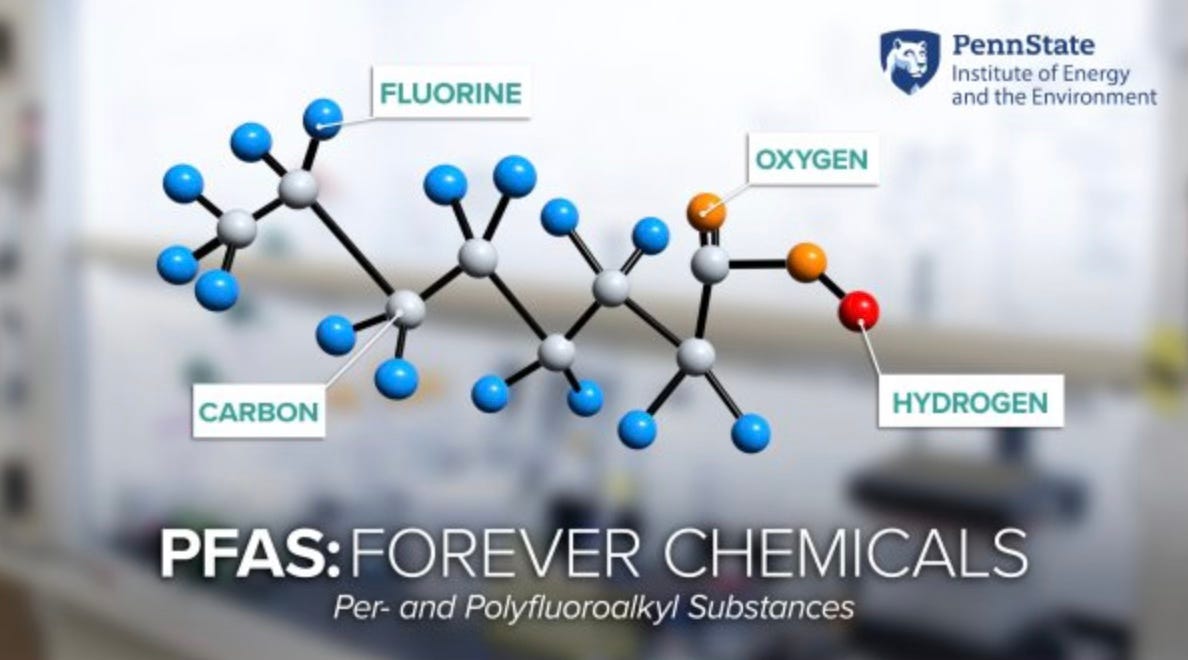
The next step is to create a biochar, a specialized form of charcoal, from the harvested plants. This destroys both the PFAS chemicals (PFOS and PFOA). The charcoal is created by heating the plants.
The current cost of remediation of farmlands by traditional means is between US$800,000 and US$1,600,000 per hectare. Remediating all of the affected US farmland would cost US$8 trillion. The new method would need to be repeated for 20 years however the total cost over that time would be just over US$29,000 per hectare which includes compensation for the farmer’s loss of income.
My Journey to Creating Maice
What did Claude first suggest and why was it totally wrong?
I signed up and paid for my Claude Pro account and then told Claude that I wanted to develop an AI Coaching tool. Within a second Claude had suggested a program that was far more like a training program than a coach. It was actually very well structured and looked like it would interesting and useful to attend but I was not interested in developing a training program.
I politely thanked Claude (if the AI’s do take over I want them to at least believe me to be polite) and said that I was trying to create something different to what was suggested. I had a strong idea in my mind but the connections between my brain and my typing fingers can sometimes produce waffle. Meaningful waffle that I completely understand but nonetheless waffle that an LLM will have to guess at meaning.
I told Claude that I am a person that thinks by talking (I do and I usually talk to myself, I know I am not alone here). I said to Claude that I will explain what I want to create and ask for ideas and input where I need it. Once Claude stopped trying to solve my problem but listen to what I wanted, we quickly put together a more coherent description of what Maice would eventually become.
My advice is to talk to your LLM and make sure that they understand what you are trying to create or do, prior to them rushing to solution. Take your time explaining and discussing. I still had to stop Claude many times along the way. Claude took quite some time to truly understand what I was trying to create. Claude did adapt over time and eventually understood my thinking. This is when Claude became a great working partner.
Paying it Forward
If you have a start-up or know of a start-up that has a product ready for market please let me know. I would be happy to have a look and feature the startup in this newsletter. Also if any startups need introductions please get in touch and I will help where I can.
If you have any questions or comments please comment below.
I would also appreciate it if you could forward this newsletter to anyone that you think might be interested or provide a recommendation on Substack.